
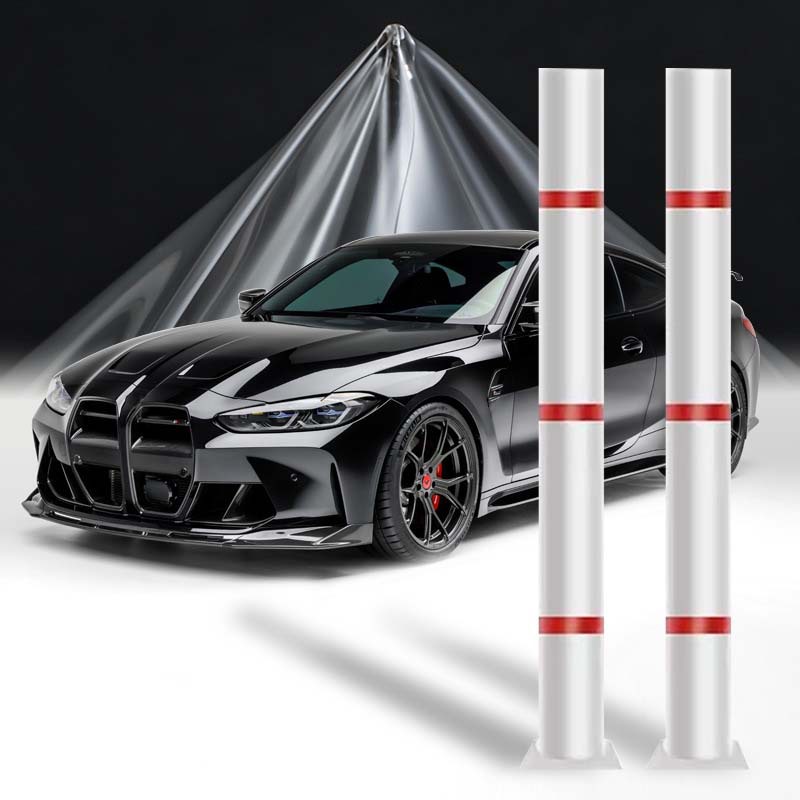
Lisons un article sur le vieillissement dû aux rayons UV.
Table des matières
Une histoire
Voici un exemple concret. Un acheteur de ma connaissance a acheté un film de protection pour ses véhicules, en précisant uniquement “ conditions extérieures standard ” dans les conditions relatives au vieillissement aux UV. Résultat ? Sa flotte est revenue d'un chantier naval aux Émirats arabes unis avec l'air d'avoir vieilli de dix ans en seulement 18 mois. Son fournisseur a haussé les épaules en affirmant que les conditions avaient été respectées. Formulation vague, résultats vagues.
Je raconte cette histoire non pas parce qu’elle est dramatique (bon, d’accord, elle l’est un peu), mais parce que j’ai vu des variantes de ce scénario se reproduire dans le domaine de l’approvisionnement en films de protection pour l’automobile, l’architecture et l’industrie plus souvent que je ne voudrais le compter. La clause relative aux UV existe bel et bien. Mais elle ne dit rien. On dirait qu’elle a été rédigée par quelqu’un qui a survolé la fiche technique d’un concurrent et copié-collé les passages vagues — ce qui, honnêtement, est probablement exactement ce qui s’est passé. “ Résistant aux UV. ” “ Clarté optique durable. ” “ Résistance aux intempéries garantie dans des conditions normales d’utilisation. ” Ce sont des phrases de brochure. Du texte marketing. Dès qu’un film commence à s’effriter ou que la couche de finition se ternit 18 mois après le début d’une période de garantie de 5 ans, ces phrases ne valent absolument rien.
Alors, réglons le vrai problème.
“Le ” test de vieillissement aux UV » n'est pas une méthode. Cessez de le présenter comme tel.
Voici une évidence qui ne semble pourtant pas aller de soi — et je dis cela après avoir examiné les cahiers des charges d’entreprises qui devraient pourtant être mieux informées : le “ test de vieillissement aux UV ” est une catégorie de méthodes d’essai, et non un protocole spécifique. Écrire “ le film doit passer le test de vieillissement aux UV conformément aux normes de l'industrie ” revient, en matière d'approvisionnement, à spécifier “ doit être solide ” pour un composant structurel. Ça a l'air de vouloir dire quelque chose. Mais ça ne veut rien dire.
Un acheteur a perdu 1 614 000 TP à cause de trois mots.
La norme ASTM G154 est la méthode qu’il convient de mentionner — de manière explicite, en indiquant son numéro et son statut de révision — dans toute exigence relative au vieillissement aux UV des films de protection de peinture (PPF). Il ne s’agit pas là d’une opinion controversée. Depuis des décennies, le secteur des films automobiles s'accorde à considérer la norme G154 comme la méthode de référence en matière de vieillissement accéléré pour les matériaux non métalliques destinés à un usage extérieur, et je pense sincèrement que toute spécification qui ne la mentionne pas n'a pas été rédigée par quelqu'un qui a réellement passé du temps dans un laboratoire d'essai à observer le fonctionnement des chambres UV à lampes fluorescentes. La norme G154 spécifie tout ce qui compte : le type de lampe, le niveau d'irradiance, la structure du cycle (alternance d'exposition aux UV et de condensation), les contrôles de température, la manipulation des échantillons. Elle élimine l'ambiguïté dont profitent les fournisseurs.
À l'intérieur du G154, cependant — et c'est là que de nombreuses spécifications posent encore problème —, il est possible de choisir entre deux types de lampes : UVA-340 ou UVB-313. L'UVA-340 reproduit le spectre solaire entre 300 et 400 nm, qui correspond à la gamme de longueurs d'onde responsable de la photodégradation effective d'un film posé sur le capot d'une voiture exposée en plein soleil. L'UVB-313 a une longueur d'onde plus courte, est plus agressif et moins représentatif physiquement de l'exposition réelle en extérieur pour les applications automobiles extérieures. Spécification UVA-340. Si votre spécification actuelle indique simplement “ UV fluorescent ” sans préciser le type de lampe — corrigez-la. Aujourd’hui. Cette lacune suffit à elle seule à produire des résultats incompatibles entre des fournisseurs effectuant nominalement le même test.
La norme ASTM G155 constitue une alternative à l'arc au xénon : elle offre un spectre plus large, couvrant les gammes du visible et de l'infrarouge, mais son coût par cycle d'essai est nettement plus élevé ; elle est généralement exigée au niveau de qualification des équipementiers de premier rang. Si vous recherchez TPU PPF Grâce à ses propriétés fonctionnelles de rejet des infrarouges (qui constituent désormais un véritable argument de différenciation sur les marchés soumis à un fort ensoleillement), le G155 mérite d'être considéré comme un complément, et non comme un simple substitut au G154. Il s'agit d'un produit différent, sensible à des mécanismes de dégradation différents.
Mais — et c'est précisément le type d'échec auquel j'ai assisté — les acheteurs se contentent d'indiquer “ essai de résistance aux UV selon la norme ASTM ” et ont l'impression d'avoir fait le nécessaire. Or, ce n'est pas le cas. Un fournisseur peut satisfaire à cette exigence en utilisant la norme G155 avec une configuration de filtre non standard et une durée raccourcie, remettre un rapport d'essai techniquement conforme et faire valoir devant un panel d'arbitrage — de manière convaincante — que la spécification a été respectée. Car c'était le cas. Mais la formulation de la spécification ne signifiait tout simplement pas ce que l'acheteur pensait qu'elle signifiait lorsqu'il l'a rédigée.
Les chiffres. Les chiffres réels. Entrez-les.
Bon, la méthode d'essai, c'est la première étape. La deuxième étape est celle qui transforme un cahier des charges en une exigence concrète : définir ce qui constitue un défaut. En chiffres. Liée à des instruments et méthodes de mesure spécifiques. Pas “ ne doit pas présenter de jaunissement excessif ” (supprimez cette phrase de vos documents, s'il vous plaît, cela n'aide personne), mais des seuils quantitatifs réels qu'un technicien de laboratoire peut mesurer, enregistrer et comparer à une limite définie sans avoir à exercer le moindre jugement.
En ce qui concerne le PPF — et je vais être précis ici, car c'est justement le but —, les indicateurs de dégradation pertinents et leurs seuils se présentent comme suit :
ΔE (changement de couleur) : Colorimétrie CIE L*a*b*. Film transparent, ΔE supérieur à 1,5 après 1 000 heures d'exposition au G154 — cela correspond à un jaunissement perceptible à l'œil nu dans des conditions d'éclairage normales. C'est tout. Pour couleur PPF — dans la mesure où la stabilité du pigment constitue la valeur commerciale du produit, et pas seulement un critère de qualité — j’abaisserais le seuil de rejet à ΔE > 1,0. Une variation de couleur sur un film de type « wrap » est visible sur les photos. Cela entraîne des réclamations de la part des clients et des demandes de remboursement. Il ne s’agit pas d’une tolérance technique que l’on peut simplement ignorer lors du contrôle qualité.
Rétention de la brillance : Norme ASTM D523, géométrie à 60°. Une perte de 20 % par rapport à la valeur de référence après 1 000 heures — seuil courant dans l'industrie, généralement acceptable. Mais voici le problème avec Film de protection transparent à base de TPU avec une couche de finition fonctionnelle : la conservation de la brillance après vieillissement aux UV est presque entièrement déterminée par la teneur en HALS de cette couche de revêtement. Les stabilisants à la lumière à base d'amines encombrées — c'est le composant du mélange de stabilisants UV que les fournisseurs soucieux de réduire les coûts sont les premiers à supprimer, car il est invisible dans la fiche technique du produit et n'est presque jamais mentionné. Votre critère de conformité/non-conformité est le seul levier dont vous disposez à cet égard. Utilisez-le.
Rétention de l'allongement : ASTM D882. 70 % de la valeur de référence après exposition aux UV. Ce critère est régulièrement omis des spécifications, ce qui constitue une véritable erreur : un film qui satisfait à tous les tests optiques mais qui a perdu 35 à 40 % de son allongement est un film dont la capacité d'absorption des chocs et le comportement d'auto-réparation sont tous deux compromis. Les données de brillance et de couleur ne permettent pas de le détecter. Vous ne vous en rendrez compte qu’au moment d’une défaillance sur le terrain.
Brume : ASTM D1003. Augmentation ne dépassant pas 5% après 1 000 heures. Règle stricte.
Ces chiffres doivent figurer dans votre cahier des charges. La méthode de mesure doit être précisée. La durée du test doit être indiquée. L'écart admissible doit être clairement défini. Si votre clause relative aux UV ne contient aucun seuil chiffré — et c'est souvent le cas —, vous n'avez pas d'exigence en matière de vieillissement aux UV. Vous avez simplement une phrase qui prend de la place.
“ Ou équivalent ” : mal l'écrire est presque pire que de ne pas l'écrire du tout
Exact. La clause “ ou équivalent ”. Je comprends pourquoi elle existe : ce n’est pas de la paresse intellectuelle, mais du pragmatisme commercial, et cela ne pose pas de problème. Exiger exclusivement la norme ASTM G154 d'un fabricant coréen ou taïwanais dont l'ensemble du système de certification repose sur la norme ISO 4892-3 crée des tensions avec les fournisseurs sans apporter de réel avantage en termes de qualité. Les principes physiques sous-jacents sont les mêmes. Les méthodes sont véritablement comparables sur le plan technique.
Le problème — et il s'agit là d'un véritable problème, pas d'une simple hypothèse théorique — est que la mention “ ou équivalent ”, en l'absence d'une définition écrite de ce qu'est l'équivalence, laisse aux fournisseurs la possibilité de proposer pratiquement n'importe quoi et de prétendre que cela répond aux critères. J'ai vu le terme “ équivalent ” étendu pour couvrir des configurations de test qui partageaient les mots “ UV fluorescent ” avec la norme G154, mais pratiquement rien d'autre.
Une clause qui résiste à un examen minutieux se présente comme suit :
“ Le fournisseur peut remplacer la norme ASTM G154 par la norme ISO 4892-3 (lampes UV fluorescentes, cycle 1 : 8 h d'UV à 60 °C / 4 h de condensation à 50 °C) à la place de la norme ASTM G154, à condition que : (a) l'exposition totale au rayonnement en kJ/m² à 340 nm soit documentée comme étant statistiquement équivalente au protocole G154 pour la durée spécifiée, (b) tous les seuils de réussite/échec définis à la section 4.3 de la présente spécification restent inchangés et sont appliqués sans modification, et (c) les essais sont effectués par un laboratoire tiers titulaire d’une accréditation ISO/IEC 17025 en cours de validité délivrée par un organisme national d’accréditation reconnu. ”
L'exigence de la norme 17025 — c'est celle pour laquelle je me battrais le plus si un fournisseur contestait les conditions d'achat. Selon ILAC (Coopération internationale pour l'accréditation des laboratoires), Les laboratoires accrédités selon la norme 17025 opèrent selon des exigences documentées du système de gestion de la qualité (SGQ) qui incluent des calendriers réguliers d’étalonnage des instruments et des essais d’aptitude interlaboratoires obligatoires — deux mesures qui permettent d’éviter la dérive des équipements et la variabilité liée à l’opérateur, susceptibles de fausser les résultats des essais de vieillissement accéléré de 15 à 30% d’un établissement à l’autre. Il ne s’agit pas d’une erreur d’arrondi. C'est la différence entre un résultat conforme et un résultat non conforme. Sans cette exigence d'accréditation, un fournisseur effectue le test en interne sur une armoire UV fluorescente dont l'historique d'étalonnage existe principalement sur papier, produit un rapport au format professionnel, et vous n'avez absolument aucun moyen de le contester.
Zéro.
Le calcul entre la durée des tests et la durée de la garantie que presque personne ne fait
Pourtant — et c'est ce qui me laisse vraiment perplexe à chaque fois que j'y suis confronté —, même les acheteurs qui rédigent des clauses de méthode d'essai correctes et des critères de conformité raisonnables ne vérifient presque jamais si la durée d'essai qu'ils exigent correspond bien à la période de garantie qu'ils promettent. La clause de garantie stipule cinq ans. La spécification UV indique 1 000 heures de G154. Personne ne fait la conversion.
La conversion est importante.
Recherches disponibles via Le NIST sur la corrélation en matière de vieillissement accéléré — estimation approximative, qui n’est pas une constante universelle et dépend de la chimie des polymères — : 1 000 heures d’exposition au G154 UVA-340 correspondent à environ 1 à 2 ans d’exposition réelle en extérieur dans des climats à forte intensité UV. La zone équatoriale de Singapour. Phoenix. La côte des Émirats arabes unis. Ainsi, une garantie de cinq ans sur film de protection de la peinture TPU transparent Les produits commercialisés sur ces marchés, étayés par 1 000 heures de données issues de tests aux UV, s'accompagnent d'un engagement commercial de cinq ans, étayé par des preuves matérielles couvrant une année. Peut-être deux ans, si l'on se montre généreux avec le facteur de corrélation.
Ce n'est pas une garantie. Ce ne sont que des vœux pieux couchés sur du papier à en-tête.
Pour bénéficier de la garantie de cinq ans sur les films destinés au marché des applications à forte exposition aux UV, il faut au minimum 3 000 à 3 500 heures d'essais G154. À mon sens, ce n'est pas négociable. Et une analyse de la durabilité des polymères datant de 2023, réalisée par le Société américaine de chimie sur les films en TPU aliphatiques — la base chimique de tout produit PPF automobile de qualité disponible sur le marché — a révélé que la dégradation hydrolytique induite par les UV s'accélère considérablement au-delà de 2 500 heures d'exposition dans des conditions combinées de cycles d'UV et d'humidité, les films présentant une teneur insuffisante en HALS se dégradant environ 40% plus rapidement dans les protocoles combinés par rapport à une exposition aux seuls UV.
C'est précisément pour cette raison que le cycle de condensation n'est pas facultatif dans votre spécification G154. La norme prend en charge à la fois les configurations « UV seul » (sans condensation) et les configurations combinées UV/condensation. Vous devez opter pour le protocole combiné. La version « UV seul » est plus facile à valider — ce qui explique justement pourquoi certains fournisseurs préfèrent effectuer les essais de cette manière lorsque la spécification ne l'interdit pas.
À quoi ressemble une section des spécifications qui résiste réellement à une contestation?
Court. Numéroté. Sans lacunes. Aucune formulation que l’avocat d’un fournisseur chargé des contrats ne puisse exploiter.
Vos exigences en matière de vieillissement aux UV devraient faire l'objet d'une section numérotée distincte — et non être noyées dans une clause générale sur les performances à la page 14, sous les exigences d'adhérence et les tolérances d'épaisseur du film. Une section à part entière. Avec les éléments suivants, dans cet ordre :
- Norme de référence : ASTM G154, dernière révision en vigueur. La norme ISO 4892-3, cycle 1, est considérée comme équivalente dans les conditions définies à la [section X].
- Type d'ampoule : UVA-340. L'utilisation d'autres types de lampes nécessite une autorisation écrite préalable, accompagnée de données d'équivalence documentées qui doivent être soumises et approuvées avant le début des essais.
- Durée du test : 2 000 heures au minimum pour bénéficier de la garantie de 3 ans. 3 500 heures au minimum pour bénéficier de la garantie de 5 ans. Aucune exception. Les données de test partielles ne sont pas acceptées.
- Protocole de cycle : 8 heures d'exposition aux UV à 60 °C ± 3 °C / 4 heures de condensation à 50 °C ± 3 °C.
- Irradiance : 0,89 W/m² à 340 nm.
- Critères de réussite/échec : ΔE ≤ 1,5 (film transparent) ou ΔE ≤ 1,0 (film coloré) ; conservation de la brillance ≥ 80 % de la valeur de référence avant exposition ; augmentation de la opacité ≤ 5 % ; conservation de l'allongement ≥ 70 % de la valeur de référence avant exposition.
- Normes de mesure : CIE L*a*b* (variation de couleur), ASTM D523 à 60° (brillance), ASTM D1003 (opacité), ASTM D882 (résistance à la traction/allongement).
- Accréditation des laboratoires : ISO/IEC 17025, uniquement pour les laboratoires tiers. Les données d'essais fournies par le fournisseur lui-même ne sont en aucun cas acceptées, quelle que soit la certification interne du système de gestion de la qualité.
- Obligations en matière de déclaration : Registre complet des expositions, certificats d'étalonnage des instruments valides au moment de l'essai, données brutes complètes sur les échantillons — au moins n = 5 échantillons par condition d'essai.
- Lien vers la garantie : La réussite confirmée du test pendant la durée requise donne droit à la période de garantie indiquée. L'échec à un seul critère entraîne une disqualification totale, sous réserve d'une reformulation et d'un nouveau test complet. Aucune réussite partielle n'est admise. Aucun critère ne peut faire l'objet d'un nouveau test isolément.
Est-ce que cela prend plus de temps à rédiger que de reprendre une clause vague tirée d'un contrat précédent ? Oui. Environ deux heures de plus. Une clause vague résiste-t-elle à un litige en matière de garantie portant sur plusieurs centaines de milliers d'euros ? Voir le premier paragraphe.
Encore une chose — film de protection en polypropylène noir piano plus précisément. Ajoutez à tout ce qui précède une évaluation de la visibilité des micro-rayures après exposition aux UV. L'interaction entre le voile et la profondeur provoquée par la dégradation de la couche de finition UV sur les substrats noirs très brillants est véritablement invisible pour un brillancemètre standard à 60° : la mesure semble correcte, le film a un aspect déplorable sous une lumière rasante dans un showroom, et les réclamations au titre de la garantie arrivent avant que quiconque dans la chaîne d'approvisionnement ne comprenne ce qu'il a sous les yeux. Testez-le explicitement ou préparez-vous à avoir des surprises.
Foire aux questions sur le vieillissement dû aux UV
En quoi consiste le test ASTM G154 pour les films de protection de peinture ?
La norme ASTM G154 est une norme d'essai de vieillissement accéléré aux UV destinée aux matériaux non métalliques, qui utilise des lampes UV fluorescentes — généralement de type UVA-340 pour les films destinés à l'extérieur des véhicules — et alterne des phases d'exposition aux rayons UV et de condensation afin de simuler des années de dégradation solaire réelle en extérieur sur des durées d'essai réduites, mesurées en heures. Pour l'approvisionnement en films de protection de peinture (PPF), il s'agit de la principale méthode d'essai de qualification, les résultats de réussite ou d'échec des fournisseurs étant évalués par rapport à des seuils optiques quantitatifs (ΔE, augmentation de la turbidité, rétention de la brillance) et à des seuils mécaniques (rétention de l'allongement) sur des durées d'essai allant de 1 000 à 3 500 heures, en fonction de la période de garantie à qualifier.
Comment les heures de test de vieillissement aux UV se traduisent-elles en années de garantie réelles pour les films de protection de peinture (PPF) ?
Ce n’est pas un chiffre fixe : le rapport de conversion varie en fonction de l’intensité géographique des UV, de la composition chimique du polymère du film, de la concentration en HALS dans la couche de finition, et selon que le protocole G154 inclut des cycles de condensation ou se limite à une exposition aux UV. L'estimation la plus couramment citée, issue des travaux de corrélation sur le vieillissement accéléré du NIST, estime que 1 000 heures d'exposition G154 aux UVA-340 correspondent à environ 1 à 2 ans d'exposition réelle en extérieur dans des climats à forte intensité UV. Selon ce calcul, une garantie de 5 ans nécessite au minimum 3 000 à 3 500 heures d'essai — ce qui ne correspond pas aux exigences de la plupart des spécifications actuelles.
La norme ISO 4892-3 peut-elle remplacer la norme ASTM G154 dans le cahier des charges d'un fournisseur de films de protection pour peinture ?
Oui — la norme ISO 4892-3, cycle 1 (8 h de rayonnement UV fluorescent / 4 h de condensation, UVA-340) est techniquement équivalente à la norme ASTM G154 au niveau de la méthode et constitue une substitution légitime et raisonnable pour les fournisseurs des marchés asiatiques ou européens, où l'infrastructure de certification ISO est la norme. Mais cette substitution n'est valable — tant sur le plan juridique que technique — que si trois conditions sont remplies par écrit : le fournisseur fait appel à un laboratoire tiers accrédité ISO/IEC 17025, documente l'exposition totale au rayonnement équivalente en kJ/m² et applique sans modification tous les seuils de conformité/non-conformité prévus dans le cahier des charges. Sans ces trois conditions explicitement mentionnées dans le libellé du contrat, le terme “ équivalent ” n'est qu'un mot.
Quels critères de conformité ou de non-conformité une spécification relative au vieillissement aux UV d'un film de protection de surface (PPF) doit-elle inclure ?
Une spécification relative au vieillissement aux UV destinée aux marchés publics doit définir des seuils quantitatifs pour au moins quatre propriétés, chacune étant référencée à une norme de mesure spécifique : changement de couleur (ΔE ≤ 1,5 pour un film transparent, mesuré selon la norme CIE L*a*b*), rétention de brillance (≥ 80% par rapport à la valeur de référence avant exposition selon la norme ASTM D523 à 60°), augmentation de la opacité (≤ 5% selon la norme ASTM D1003) et rétention d'allongement (≥ 70% de la valeur de référence selon la norme ASTM D882). Tout critère non associé à une norme de mesure spécifique n'est pas applicable. C'est simple.
Pourquoi l'accréditation des laboratoires est-elle importante dans les essais de vieillissement aux UV sur les films plastiques ?
L'accréditation ISO/IEC 17025 d'un laboratoire signifie que l'installation d'essai fonctionne selon un système de gestion de la qualité documenté qui impose un étalonnage régulier des instruments et des essais d'aptitude interlaboratoires — deux éléments qui permettent de détecter la dérive des équipements et les incohérences des opérateurs, susceptibles de faire varier les résultats des essais de vieillissement accéléré de 15 à 30% d'un laboratoire à l'autre. Sans cette exigence d'accréditation, les données UV internes fournies par le fournisseur ne s'accompagnent d'aucune piste d'audit, d'aucun mécanisme de validation externe et d'aucune base permettant à l'acheteur de contester un résultat qui semble étrangement commode. Vous vous fiez simplement à leur parole. C'est tout.
Prêt à donner un véritable sens à vos spécifications PPF ?
Sortez votre clause actuelle relative au vieillissement aux UV. Tout de suite. Lisez-la. Comptez les seuils chiffrés. Comptez les normes de mesure mentionnées. Comptez les durées d'essai précises associées à des périodes de garantie précises.
Si ce nombre est égal à zéro, vous savez déjà ce qu'il faut faire.
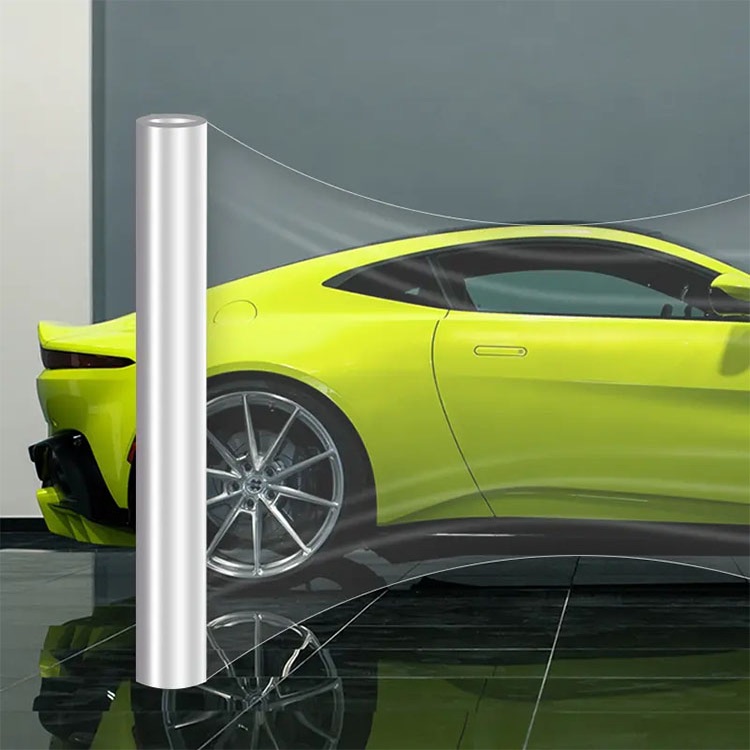
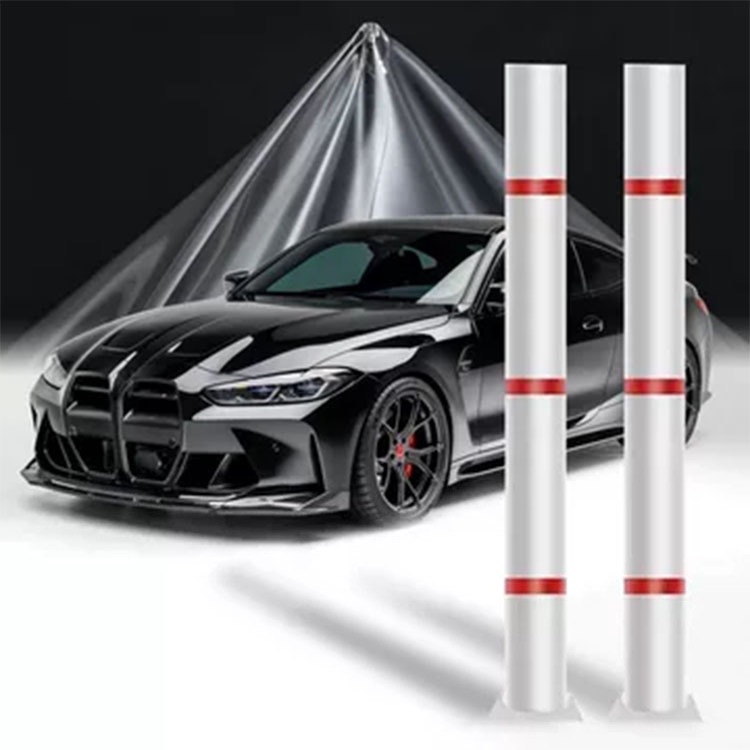
La gamme de films de Keentop Industrial — transparent TPU PPF, couleur PPF, film TPU spécialisé — est validée par des données réelles de vieillissement aux UV. Lorsque vous contactez votre interlocuteur commercial, demandez-lui les rapports d'essai G154 portant sur au moins 2 000 heures. Demandez-lui quel type de lampe a été utilisé. Demandez-lui le numéro du certificat ISO 17025 afin de pouvoir vérifier l'accréditation du laboratoire directement auprès de l'organisme émetteur.
Si l'une de ces trois questions suscite une hésitation — ou si on vous renvoie vers quelqu'un d'autre, ou si on vous répond “ on vous le fera savoir ” —, vous avez déjà votre réponse. Avant même d'avoir passé la moindre commande.

 English
 Français
 Deutsch
 Italiano
 Español
 Português
 العربية
 Русский