
El negro. Lo muestra. Todo.
Índice
Lo aprendí por las malas con el Porsche 911 de un cliente, en negro brillante. La instalación del PPF en negro piano acababa de hacerse y tenía un aspecto impresionante en el momento de la entrega: un acabado profundo y especular, exactamente lo que el cliente había pagado. Tres meses después recibí una llamada. La lámina tenía un aspecto velado bajo la tira de LED del garaje. Se veían marcas de remolinos desde dos metros de distancia.
La película no tenía ningún defecto. El guion era el que estaba mal.
Lo que había conseguido era una lámina de color negro piano con unos valores de brillo excelentes —92 GU a 60°, lo que queda muy bien en la ficha técnica— y una capa superior tan fuertemente reticulada para mantener el brillo que el mecanismo de autorreparación quedaba prácticamente bloqueado. Cada pasada con el guante de lavado dejaba un microarañazo. La superficie no podía recuperarse. Y en un acabado negro intenso, los microarañazos no se disimulan en el fondo como lo hacen en el plateado o el blanco. Se acumulan. Reflejan la luz. Se convierten en el centro de atención.
La adquisición de láminas de protección de pintura (PPF) en negro piano requiere un marco de especificaciones diferente al de las láminas transparentes. Y la mayoría de los compradores B2B no lo aplican.
Por qué el acabado negro brillante lo cambia todo en cuanto a las especificaciones de durabilidad de la superficie
El film transparente es indulgente. Las imperfecciones se disimulan entre el ruido óptico de la transparencia. Un arañazo de 0,5 micras en una instalación de film transparente resulta prácticamente invisible para el cliente final en condiciones normales de visión. Ese mismo arañazo de 0,5 micras en una superficie de color negro piano refleja la luz direccional desde todos los ángulos y se hace visible en todo el panel.
Eso es física, no una opinión. Y tiene implicaciones directas en cómo se redacta un pliego de condiciones para la adquisición de PPF negro brillante.
Los parámetros estándar de resistencia al rayado que se utilizan para las películas transparentes —dureza al lápiz según la norma ASTM D3363 y visibilidad inicial de los arañazos bajo iluminación estándar— son necesarios, pero no suficientes para aplicaciones en negro piano. Lo que estas pruebas no tienen en cuenta es el comportamiento acumulativo de los microarañazos tras los ciclos de lavado, la relación entre la densidad de reticulación de la capa superior y la tasa de respuesta de recuperación, y la consecuencia óptica de los arañazos por debajo del umbral en una superficie negra de alto brillo que carece de camuflaje óptico.
A Análisis del rendimiento de los recubrimientos para el sector de la automoción en 2023, publicado en la revista «Coatings» de MDPI Se descubrió que la visibilidad de los arañazos en sustratos negros de alto brillo se hacía perceptible a profundidades de tan solo 0,2 micras, un umbral 60% inferior al umbral de detección en sustratos equivalentes de color plateado o blanco en condiciones de iluminación estandarizadas. Esa es la cifra que define el requisito de rendimiento para el PPF negro piano. No “resistente a los arañazos”. Arañazos invisibles a 0,2 micras. Bajo luz direccional. Tras 12 meses de ciclos de lavado.
La trampa de reticulación de la capa superior
Hay algo que, sinceramente, creo que el sector no valora lo suficiente —y que a los compradores B2B les cuesta mucho dinero en reclamaciones tras la instalación.
La densidad de reticulación de la capa superior es la variable que determina tanto el brillo inicial como la capacidad de recuperación frente a los arañazos a largo plazo. Y esas dos propiedades tienden en direcciones opuestas. Al aumentar la densidad de reticulación, mejoran los valores de brillo inicial y la dureza de la superficie. Sin embargo, también se reduce progresivamente la movilidad de las cadenas poliméricas que permite la autorreparación. Existe un punto de equilibrio en la formulación más allá del cual la capa superior resulta demasiado rígida para recuperarse de los microarañazos, y en el caso de las aplicaciones en negro piano, ese punto es de vital importancia.
La prueba que pone de manifiesto esta relación es la recuperación de arañazos medida con un perfilómetro: no se trata de una evaluación visual ni de pasar la uña, sino de un perfilómetro de aguja que mide la profundidad real del arañazo antes y después de un ciclo de calentamiento definido. Las formulaciones de PPF negro piano de alta calidad deben mostrar una recuperación de la profundidad del arañazo ≥90% a 40 °C en un plazo de 30 minutos para arañazos en el rango de profundidad de 1 a 3 micras. Esa es la especificación que indica si la capa superior es realmente autorreparable o simplemente brillante.
Si la ficha técnica de un proveedor muestra unos valores de GU excelentes y carece de datos de recuperación del perfilómetro, ahí está la trampa de los reticulados. Han optimizado el producto para obtener unos valores que impresionan en la demostración y se han saltado la prueba que revela el comportamiento a largo plazo. He visto este patrón repetidamente, y los fallos resultantes en el uso son siempre los mismos: impecable en el momento de la entrega, opaco a los seis meses de lavado habitual.
Marcas de remolino: por qué son un problema de especificación, no de instalación
Las marcas de remolinos en la película negra se achacan constantemente a los instaladores. Equipo inadecuado. Técnica de lavado incorrecta. Método de secado inadecuado. Y, a veces, esas acusaciones son acertadas.
Pero esta es la cruda realidad: en una parte importante de las quejas sobre marcas de remolinos en el PPF negro piano que he investigado, la causa principal no es la técnica de instalación. Se trata de una formulación de la capa superior que es químicamente incompatible con los entornos de lavado en los que se utilizará realmente la lámina —lavaderos automáticos, lavado a presión, sistemas de lavado manual— y que produce una acumulación de microarañazos que la autorreparación no puede compensar.
La prueba que detecta este problema antes de la instalación es la prueba de abrasión Taber según la norma ASTM D4060: consiste en aplicar una rueda de abrasión giratoria sobre la superficie del film con una carga definida durante un número determinado de ciclos, midiendo la retención del brillo antes y después. En el caso del PPF negro piano, una especificación premium requiere una retención del brillo ≥85% según la norma ASTM D523 a 60° tras 100 ciclos Taber con una carga de 500 g. Ese umbral distingue las láminas que mantienen su acabado bajo el contacto mecánico del mundo real de aquellas que parecen perfectas en el laboratorio y se degradan en la primera temporada de lavados.
Y, lo que es más importante: solicite los datos de Taber tras el envejecimiento por UV según la norma ASTM G154, no solo con la película sin tratar. La exposición a los rayos UV altera la composición química de la capa superior con el tiempo, lo que afecta a la resistencia a los arañazos. La película que supera la prueba Taber en el momento de la instalación puede fallar a los 18 meses, una vez que los rayos UV hayan alterado la red polimérica. El resultado de la prueba Taber tras la exposición a los rayos UV es la cifra que predice el rendimiento en condiciones reales. También es la cifra que la mayoría de los proveedores no incluyen en la documentación estándar de la ficha técnica (TDS), a menos que se solicite específicamente.
Para película protectora de pintura negro piano En lo que respecta específicamente a la adquisición, esta secuencia de pruebas —recuperación del perfilómetro más Taber post-UV— constituye el marco mínimo de control de calidad que se puede justificar. Cualquier otra cosa resulta insuficiente para las exigencias ópticas del acabado.
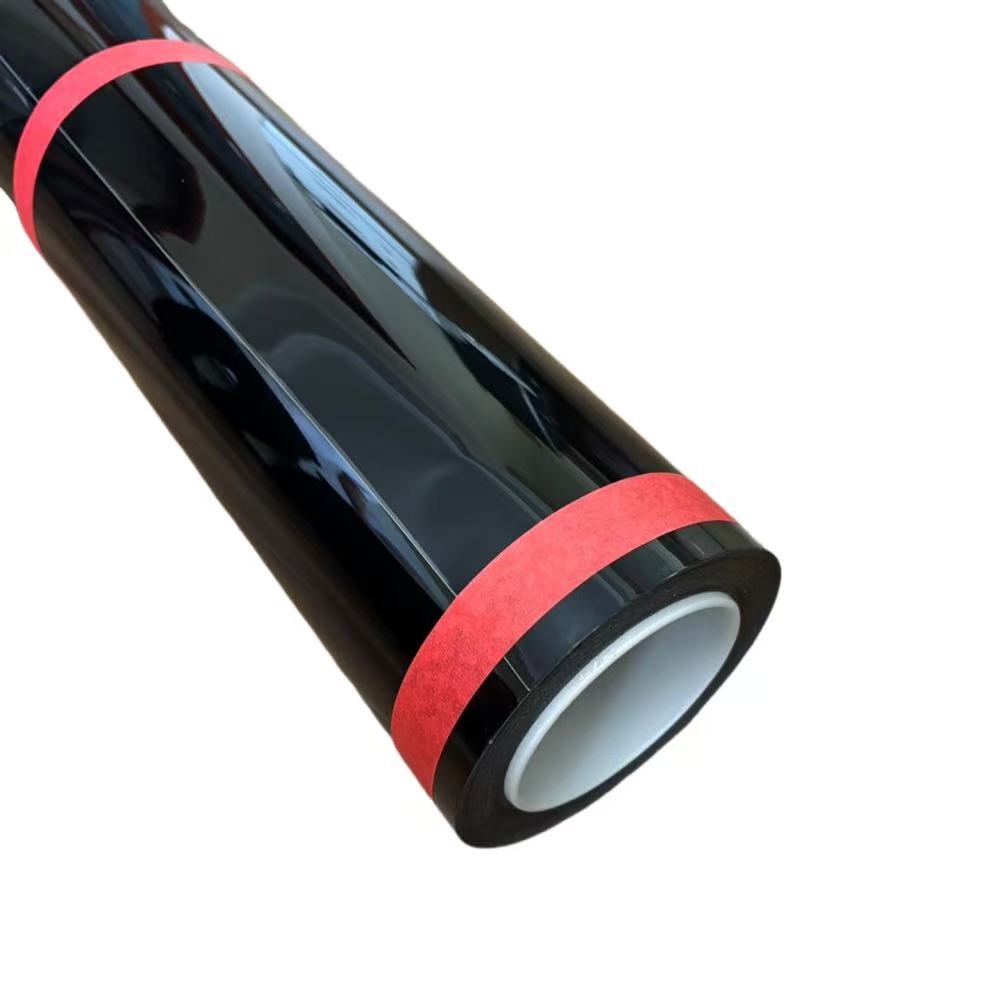
Características ópticas del negro brillante: más allá de las unidades de brillo
La mayoría de las conversaciones sobre la adquisición de láminas protectoras de pintura (PPF) en negro piano comienzan y terminan con el índice de brillo. Entiendo por qué: el índice de brillo es la cifra que los instaladores pueden medir sobre el terreno, que los clientes pueden percibir de forma intuitiva y que los equipos de ventas pueden comunicar. Sin embargo, para las adquisiciones B2B que deben garantizar un rendimiento a lo largo de una vida útil de entre 5 y 7 años en vehículos de alto valor, el índice de brillo por sí solo no es una especificación suficiente.
Hay tres parámetros ópticos que requieren sus propias líneas de especificación para el PPF negro brillante:
Unidades de brillo a 60° (ASTM D523): objetivo ≥90 GU para aplicaciones de negro piano de alta calidad. Esta es la referencia. No es el panorama completo.
Nitidez de la imagen (DOI) (ASTM E430): objetivo ≥85 en una escala de 0 a 100. El DOI mide la nitidez con la que la superficie de la película refleja una imagen; es el parámetro que determina si el acabado parece un espejo o una aproximación ligeramente borrosa de uno. Las láminas pueden presentar un GU alto con un DOI mediocre, ya que el GU mide la intensidad de la reflectancia especular, mientras que el DOI mide la nitidez angular del reflejo. En un acabado negro piano bajo la iluminación de una sala de exposición, un DOI bajo se aprecia de inmediato. Un GU alto no lo compensa.
Neblina especular (Medición según ASTM D4039 o BYK Haze-Gard): objetivo ≤0,51 TP5T. La opacidad especular mide la dispersión en ángulo estrecho alrededor del reflejo especular —el efecto de “velo” que hace que una película parezca ligeramente brumosa sin llegar a estar visiblemente turbia—. En una superficie negra bajo luz direccional, la neblina especular es visible a niveles que no se registrarían en blanco o plata.
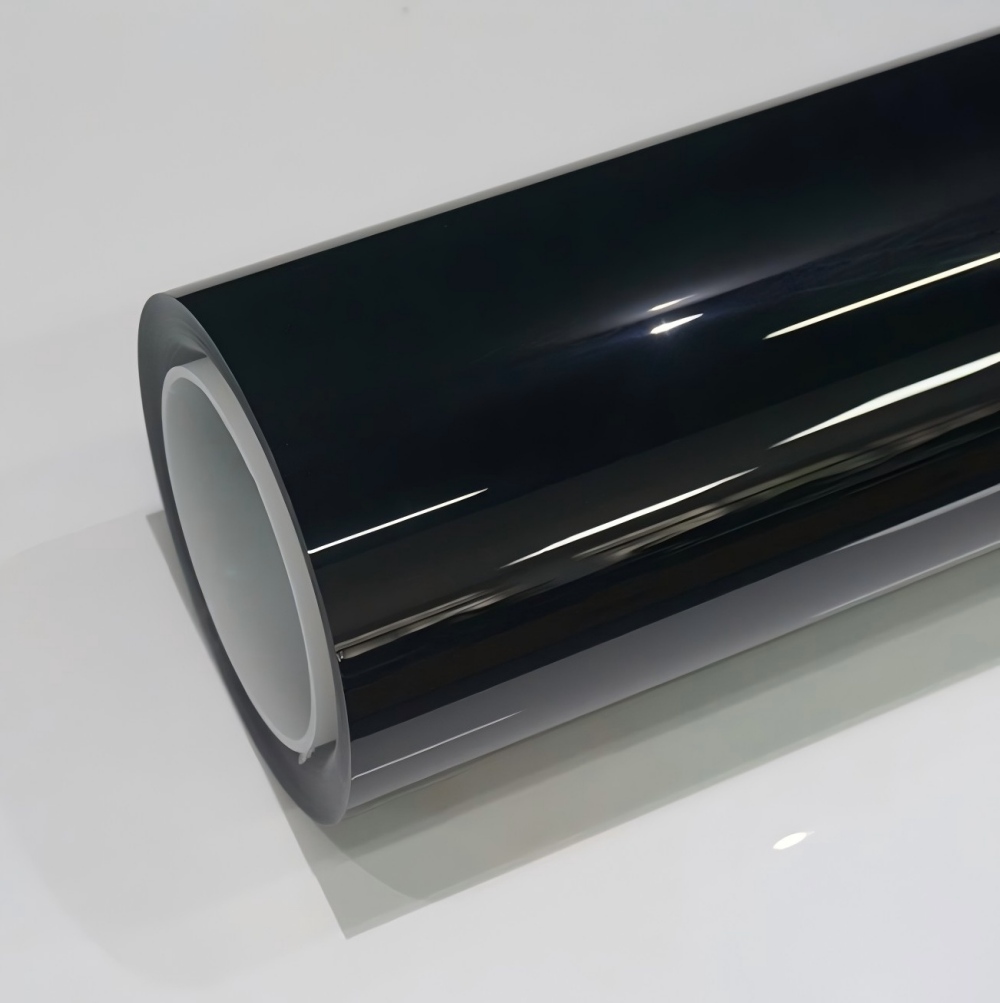
Tabla de referencia de especificaciones del PPF en negro piano
| Parámetro | Especificaciones en negro piano premium | Mínimo aceptable | Método de ensayo |
|---|---|---|---|
| Unidades de brillo (60°) | ≥92 GU | ≥85 GU | ASTM D523 |
| Nitidez de la imagen (DOI) | ≥90 | ≥80 | ASTM E430 |
| Niebla especular | ≤0.3% | ≤0,81 TP5T | BYK Haze-Gard |
| Recuperación de arañazos (profilómetro) | ≥90% a 40 °C / 30 min | ≥751 TP5T a 60 °C / 60 min | Perfilómetro + palpador |
| Abrasión Taber (100 ciclos, 500 g) | ≥881 retención de TP5T GU | ≥80% retención de GU | ASTM D4060 + D523 |
| Taber Post-UV (1000 h según la norma ASTM G154) | ≥851 retención de TP5T GU | ≥751 retención de TP5T en la vejiga | ASTM G154 + D4060 |
| Dureza del lápiz | ≥3 h | ≥2 h | ASTM D3363 |
| Alargamiento a la rotura | ≥380% | ≥350% | ASTM D882 |
| Amarilleamiento por rayos UV (ΔYI, 1000 h QUV) | ≤1,5 | ≤3,0 | ASTM D1925 + G154 |
| Temperatura de autorreparación (temperatura ambiente) | ≤30 °C | ≤40 °C | Visual + perfilómetro |
La fila «post-UV» de Taber es la que la mayoría de los equipos de compras no tienen. También es la que permite predecir si la lámina seguirá funcionando correctamente al tercer año o si se habrá convertido en una superficie en la que se acumulan residuos, lo que genera quejas. Inclúyela en las especificaciones antes de que se envíe el primer pedido.
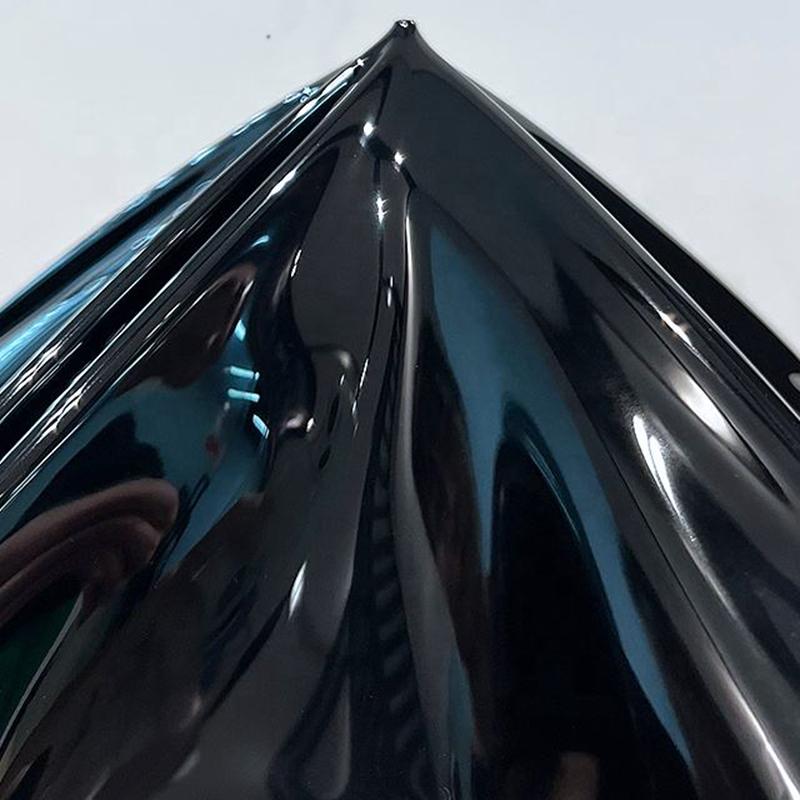
Resistencia química en el negro: el modo de fallo oculto
Hay un tipo de defecto en el PPF negro piano del que rara vez se habla en las conversaciones sobre adquisiciones, ya que no se parece a un arañazo ni a una marca circular, sino que se presenta como una mancha opaca aleatoria que aparece semanas después de la instalación y no responde al calor ni a ningún tratamiento.
La causa suele ser la corrosión química provocada por la contaminación ambiental —los ácidos de los excrementos de aves, los residuos industriales, los depósitos de calcio del agua dura— que reacciona con una capa superior que no tiene suficiente resistencia química. En el caso de la película transparente, la corrosión leve es difícil de apreciar y a menudo se confunde con suciedad. En el negro piano, provoca un cambio de textura en la superficie que refleja la luz de forma diferente al área circundante y se aprecia de inmediato.
Las especificaciones de resistencia química para el PPF en negro piano exigen la realización de ensayos en un rango de pH de 3,5 a 10,0, que abarca desde la acidez de los excrementos de aves en el extremo inferior hasta los depósitos de calcio del agua dura en el extremo superior. El protocolo de ensayo es la norma ASTM D1308 (efecto de los productos químicos domésticos sobre acabados orgánicos transparentes y pigmentados), adaptada para la aplicación de PPF: aplicar el agente químico, cubrir, dejar actuar durante 24 horas a 23 °C, retirar, evaluar la retención del brillo y el cambio en la textura de la superficie. Especificaciones del negro piano premium: retención ≥95% GU y sin cambios visibles en la textura de la superficie en todo el rango de pH probado.
Cobertura de Reuters sobre el mercado de recambios para automóviles en 2023 Se observó que las reclamaciones por contaminación química en la categoría de láminas de protección de pintura (PPF) de alta gama aumentaron con respecto al año anterior, a medida que la gama de vehículos se decantaba por colores de pintura más oscuros, lo cual tiene sentido, ya que las consecuencias ópticas del ataque químico son más visibles y tienen mayor relevancia comercial en superficies oscuras que en las claras. Esta tendencia hace que las especificaciones de resistencia química para el PPF negro sean más importantes en 2024 de lo que lo eran hace tres años.
Cómo estructurar las especificaciones de contratación B2B
Para compradores que buscan proveedores TPU PPF o película PPF de color En el caso de aplicaciones para vehículos negros a gran escala, el documento de especificaciones debe incluir parámetros que no se exigen en la adquisición estándar de láminas transparentes. Esta es la estructura que resiste la presión:
Sección 1 — Rendimiento óptico: GU, DOI, opacidad especular con umbrales numéricos y métodos de ensayo específicos.
Sección 2 — Durabilidad de la superficie: recuperación de arañazos en el perfilómetro a una temperatura y un tiempo determinados; abrasión Taber con un número de ciclos y una carga determinados; dureza al lápiz — todo ello con variantes antes y después de la exposición a los rayos UV.
Sección 3 — Resistencia química: rango de pH sometido a ensayo, condiciones de exposición, retención mínima de GU, protocolo de evaluación de la textura de la superficie.
Sección 4 — Propiedades de la película base: alargamiento a la rotura, resistencia al amarilleamiento por rayos UV, umbral de temperatura de autorreparación — los parámetros que determinan si la Lámina base transparente de TPU bajo el acabado negro mantendrá la integridad estructural durante toda su vida útil.
Sección 5 — Requisitos de control de calidad por lote: qué parámetros se analizan por lote, cuál es la frecuencia de muestreo y qué tipo de documentación se adjunta a cada envío.

Preguntas frecuentes
¿Qué es el PPF en negro piano y por qué requiere unas especificaciones diferentes a las del film transparente? La lámina protectora de pintura (PPF) en negro piano es una lámina de poliuretano termoplástico de alto brillo diseñada para reproducir el acabado especular de los embellecedores y superficies pintadas en negro piano de los fabricantes de equipos originales (OEM), lo que exige especificaciones ópticas y de durabilidad de la superficie más estrictas que las de las láminas transparentes, ya que las superficies negras revelan microarañazos, marcas de remolinos, velos y marcas de corrosión química a profundidades de arañazo de tan solo 0,2 micras —aproximadamente 60% menos que el umbral de detección visual en superficies plateadas o blancas bajo condiciones de iluminación direccional equivalentes—. Las especificaciones estándar de adquisición de láminas transparentes son insuficientes para aplicaciones en negro piano.
¿Qué especificaciones de resistencia a los arañazos debo exigir para un protector de pintura (PPF) en negro piano? Las especificaciones de resistencia a los arañazos del PPF en negro piano deben incluir una recuperación de la profundidad del arañazo, medida con perfilómetro, de ≥90% a 40 °C en un plazo de 30 minutos para arañazos en el rango de 1 a 3 micras, una retención del brillo tras abrasión Taber de ≥88% según la norma ASTM D4060 a 100 ciclos/500 g de carga, medida según la norma ASTM D523, una dureza al lápiz de ≥3H según la norma ASTM D3363 y, lo que es más importante, todas las mediciones Taber deben realizarse tanto antes de la exposición a los rayos UV como después de 1000 horas de envejecimiento acelerado según la norma ASTM G154, ya que la exposición a los rayos UV altera la estructura de la red polimérica de la capa superior de tal manera que cambia la resistencia a los arañazos a lo largo de la vida útil.
¿Cómo se forman las marcas de remolinos en el PPF negro piano y cómo las evita Spec? Las marcas de remolinos que aparecen en el PPF negro piano se deben a la acumulación de microarañazos durante los ciclos de lavado —por el contacto con cepillos giratorios, la fricción de los guantes de lavado o el lavado a presión— a profundidades que superan la capacidad de autorreparación de la capa superior, lo que produce patrones lineales visibles que reflejan la luz direccional sobre una superficie negra de alto brillo. Las especificaciones evitan esto mediante pruebas de abrasión Taber con cargas de contacto representativas, una tasa de recuperación verificada con perfilómetro a temperatura ambiente (≤30 °C para especificaciones premium) y la confirmación de que la densidad de reticulación de la capa superior está formulada para la respuesta de recuperación, en lugar de exclusivamente para maximizar el brillo inicial.
¿Qué parámetros ópticos son los más importantes para el PPF en negro piano, además del brillo? Más allá de las unidades de brillo (objetivo ≥90 GU a 60° según la norma ASTM D523), las especificaciones ópticas del PPF en negro piano exigen una nitidez de imagen (DOI) ≥85 según la norma ASTM E430 —que mide la nitidez reflectante independientemente de la intensidad reflectante— y una opacidad especular ≤0,51 TP5T según la medición BYK Haze-Gard, que capta la dispersión de ángulo estrecho que crea un efecto de “velo” visible en las superficies negras bajo iluminación direccional, incluso cuando las mediciones de opacidad global parecen aceptables. Las láminas pueden superar las pruebas de opacidad estándar, pero fallar visualmente en una instalación en negro piano bajo determinadas condiciones de iluminación.
¿Cómo afecta la resistencia química al rendimiento del PPF en negro piano? La resistencia química influye directamente en la durabilidad del PPF en negro piano, ya que los contaminantes ambientales —como los excrementos de aves con un pH de 3,5 a 4,5, precipitaciones industriales, depósitos de agua dura con un pH de 9–10— corroen las superficies de la capa superior de tal manera que se producen cambios de textura localizados, visibles como manchas opacas en los acabados negros, mientras que serían invisibles en una lámina transparente o de color claro. La especificación exige pruebas según la norma ASTM D1308 en todo el rango de pH de 3,5 a 10,0, con una retención de ≥95% GU y sin cambios visibles en la textura de la superficie tras 24 horas de exposición a 23 °C — un umbral que distingue las capas de acabado con resistencia química adecuada de aquellas que mostrarán corrosión durante el primer año de exposición ambiental.
¿Cuál es el paquete mínimo de control de calidad por lote para la adquisición de láminas de protección de pintura (PPF) en negro piano? Un paquete mínimo justificable de control de calidad a nivel de lote para la adquisición de láminas protectoras de pintura (PPF) en negro piano incluye: medición del coeficiente de reflectancia (GU) según la norma ASTM D523 a 60°, medición del índice de opacidad (DOI) según la norma ASTM E430, datos de recuperación de arañazos obtenidos con un perfilómetro a 40 °C, retención del brillo tras abrasión Taber según la norma ASTM D4060 y evaluación de la resistencia química según la norma ASTM D1308; todo ello medido por lote de producción, documentando el ID del instrumento, el ID del operador, la fecha de la prueba y las condiciones de acondicionamiento de la muestra. Los promedios a nivel de SKU son insuficientes para las aplicaciones en negro piano, ya que la variación entre lotes en la densidad de reticulación de la capa superior afecta directamente a la resistencia a los arañazos en el uso real de formas que el promedio estadístico oculta.

 English
 Français
 Deutsch
 Italiano
 Español
 Português
 العربية
 Русский