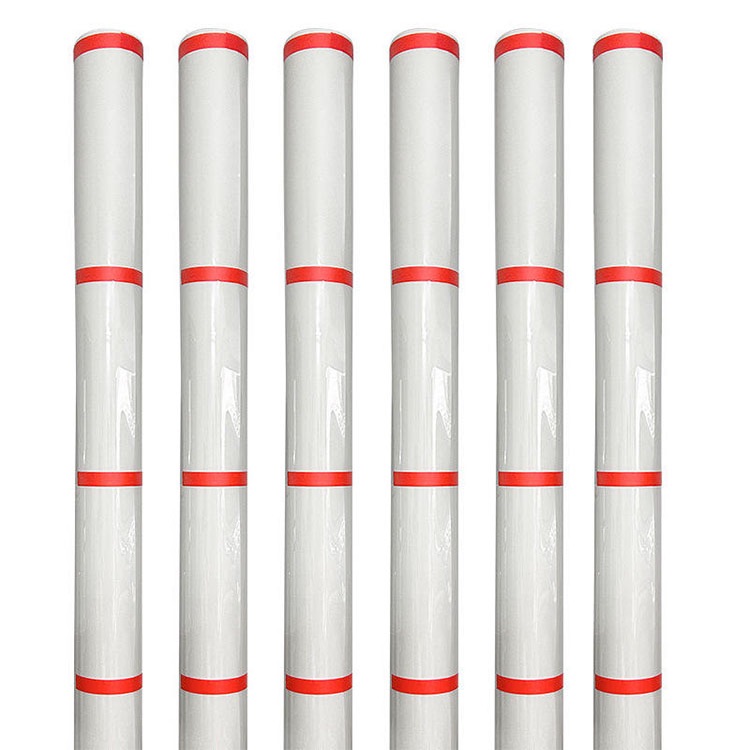
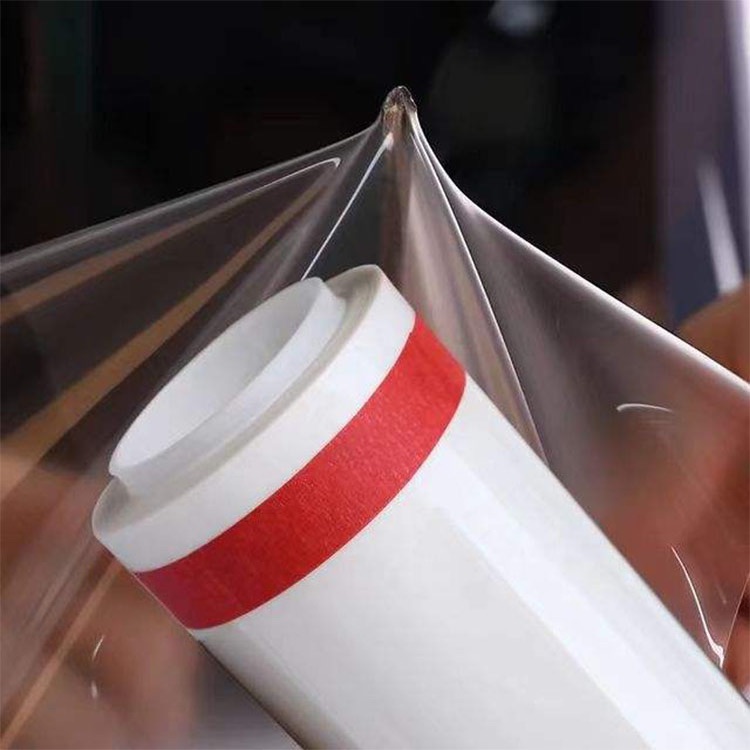
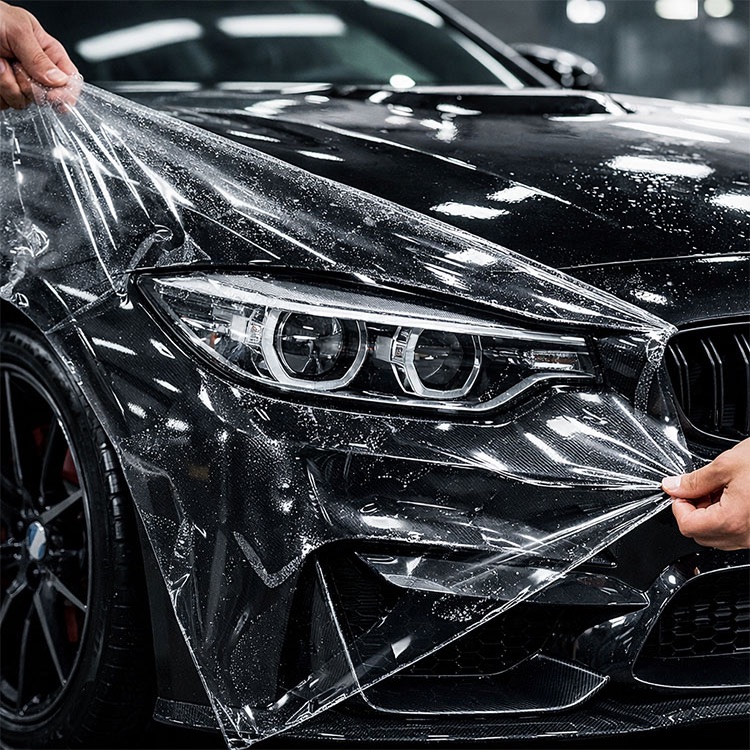
Prima di andare, parlate direttamente con il nostro direttore commerciale. Possiamo aiutarvi a valutare il vostro mercato di riferimento, la categoria di prodotti, le esigenze in termini di campioni e il piano di fornitura OEM/ODM.
Distributori cinematografici e rivenditori all'ingrosso
Installatori di pellicole oscuranti e di pellicole protettive (PPF)
Come viene prodotta la pellicola protettiva in TPU: dai granuli al prodotto finito
Come viene prodotta la pellicola protettiva in TPU: dai granuli al prodotto finito
Most people see a roll of PPF and think it is just clear plastic with a luxury markup.
Wrong industry.
A professional TPU PPF manufacturing process is closer to controlled polymer surgery than simple film production, because one bad moisture reading, one contaminated die lip, one lazy coating pass, or one unstable adhesive batch can turn a beautiful glossy roll into an installer’s nightmare six weeks later. So why do so many buyers still ask only for “price per roll”?
I have sat through enough supplier conversations to know the uncomfortable truth: the best PPF factories talk about pellets, drying curves, coating windows, tension control, and failure modes. The weak ones talk about “10-year warranty” before they show you a single test record.
That is the difference.
Indice dei contenuti
The Raw Material Is the First Lie Detector
The story starts with TPU pellets for PPF, not with the finished roll. Thermoplastic polyurethane is not a magic word. It is a family of polymers, and the chemistry matters.
For clear automotive paint protection film, aliphatic TPU paint protection film is the preferred direction because it resists UV-driven yellowing better than cheaper aromatic TPU. Aromatic TPU may look acceptable in a sample book under showroom lights. Put it on a white car in Arizona, Dubai, or Queensland, then wait.
The invoice suddenly looks cheap for a reason.
A serious manufacturer controls moisture before the pellets ever reach the extruder. TPU is hygroscopic. That means it absorbs water from the air, and trapped moisture can cause hydrolysis, bubbles, haze, fisheyes, and weakened mechanical performance during extrusion. In practical factory terms, pellets must be dried under controlled temperature and dew point conditions before feeding.
No romance here. Just discipline.
The material science backs this up. A NIST-linked polyurethane paper describes TPUs as polymers valued for elasticity, transparency, and resistance to oil, grease, and abrasion, while also making clear that TPU performance depends on the structure of soft and hard segments and the final morphology of the material. That is why “TPU” alone is not a specification; it is the beginning of the interrogation. Read the underlying polymer discussion in the NIST-hosted paper on thermoplastic polyurethane morphology.
For B2B buyers comparing suppliers, this is where I would connect the manufacturing story to product reality. A clear automotive film program should be benchmarked against a real product page such as KeenTop’s hydrophobic TPU clear PPF for auto aftermarket buyers, because clarity, anti-yellowing, hydrophobic behavior, and bulk supply consistency are not abstract brochure claims. They are manufacturing consequences.
From Pellets to Melt: Where Cheap Film Starts to Fail
The TPU film extrusion process usually relies on a cast film route rather than the kind of casual blown-film setup people imagine when they hear “plastic film.” In a proper PPF production line, dried pellets enter the hopper, move through a heated screw barrel, melt under controlled shear, pass through filtration, and exit through a flat die onto a chilled casting roll.
Simple sentence. Hard process.
The melt temperature must be high enough for flow, but not so high that the polymer suffers thermal damage; the screw must build pressure without abusing the resin; the filter pack must catch gels and contamination without causing unstable back pressure; and the die gap must be tuned so the film exits with stable gauge across the web. What happens when the factory treats this like commodity packaging film?
You get haze. You get die lines. You get soft spots. You get roll-to-roll complaints.
The hard truth is that PPF buyers often obsess over finished thickness, such as 6.5 mil, 7.5 mil, or 8 mil, but ignore thickness distribution. A film that averages 7.5 mil but swings heavily across the width is not premium. It is a liability with nice packaging.
A cast TPU base film needs tight control over:
Pellet drying temperature and residence time
Melt temperature profile across barrel zones
Screw design and shear history
Filtration mesh and gel control
T-die lip cleanliness
Chill-roll temperature and surface finish
Web tension during cooling and winding
And yes, buyers should ask for this. Not every number may be shared, but a competent manufacturer can explain the control logic.
The Layer Stack: PPF Is Not Just One Film
Finished TPU PPF is usually a multi-layer construction. The base film gets the attention, but the coating stack decides whether installers love or curse the product.
A typical professional structure includes:
Layer
Function
What Can Go Wrong
Buyer’s Real Question
Protective cap film
Protects surface during handling and transport
Static marks, contamination transfer, poor peel
Does it remove cleanly after storage?
Self-healing topcoat
Provides stain resistance, gloss, and minor scratch recovery
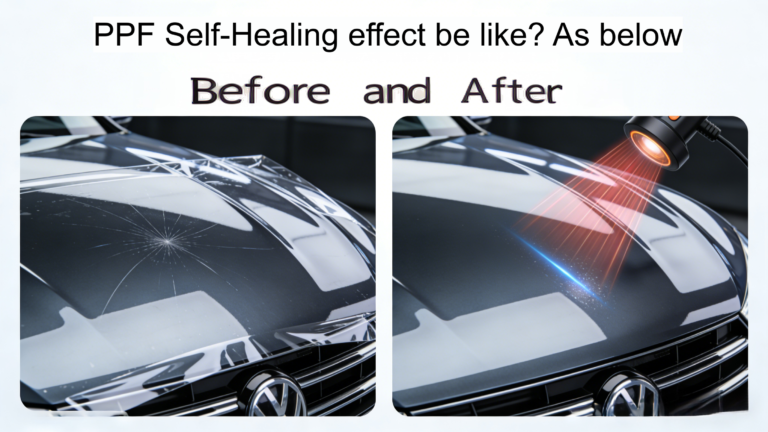
This is where self healing PPF manufacturing becomes more than a buzzword. The self-healing layer is usually a specialized elastomeric or polyurethane-based coating designed to flow or relax under heat, allowing minor swirl marks to recover. It is not magic. It is chemistry plus coating thickness plus curing control.
I have seen “self-healing” samples recover under a heat gun in five seconds and still fail under real washing abuse after a month. That is why I do not trust demo videos unless they are paired with abrasion cycles, gloss readings, stain exposure, and aging data.
For color programs, the complexity rises. Pigment dispersion, ΔE color difference, gloss stability, and UV aging become part of the manufacturing burden. KeenTop’s own discussion of Color PPF procurement rules for Delta E, gloss, and UV stability is the kind of topic buyers should care about before ordering a private-label color line.
Adhesive Coating: The Quiet Place Where Brands Get Destroyed
Nobody brags about adhesive until it fails.
But adhesive failure is one of the fastest ways to damage a PPF brand. If the pressure-sensitive adhesive is too aggressive, installers struggle with repositioning and removal. If it is too weak, edges lift. If wet-out is poor, silvering appears. If the adhesive ages badly, removal turns into a paint-risk conversation no distributor wants to have.
The coating process is usually done in a cleaner controlled environment than the extrusion zone. The adhesive is coated onto the liner or film, dried or cured depending on chemistry, then laminated into the final stack. Tension must be controlled. Web alignment must be controlled. Particles must be controlled.
Tiny dust. Big claim.
A small particle trapped in the adhesive layer may not look like much in a factory inspection room, but under a professional installer’s light tunnel, it becomes a defect the customer can see from three feet away. And when that happens on a hood, the installer does not blame “process variability.” He blames the brand printed on the box.
This is why OEM/ODM buyers should not treat private label packaging as the starting point. Packaging is the ending point. Product architecture comes first. If you are building a branded supply program, KeenTop’s Supporto alla produzione di pellicole per vetri OEM/ODM e PPF is contextually relevant because distributor programs need sampling, product matching, packaging coordination, and repeat-order consistency before they need pretty cartons.
Environmental and Worker-Safety Questions Are No Longer Optional
Here is the part some factories would rather skip.
Plastic film manufacturing is not only about optical clarity and tensile strength. It also involves emissions, solvents, coatings, cleaning chemistry, thermal processing, and worker exposure controls. The EPA’s guide on estimating air emissions from plastic products manufacturing discusses material balance, emission factors, source testing, VOCs, and hazardous air pollutants. That matters when a buyer asks whether a factory has real process controls or only a sales deck.
And polyurethane chemistry has another uncomfortable angle. OSHA notes that jobs involving exposure to isocyanates can include the manufacture of many polyurethane products and exposure during thermal degradation of polyurethane products. That does not mean every TPU PPF roll is dangerous to handle. It means responsible manufacturing requires ventilation, thermal control, PPE discipline, and chemical management. Read OSHA’s overview on isocyanates in polyurethane-related work.
Then there is the coatings question.
Hydrophobic and stain-resistant claims are now watched more closely because global chemical regulation has moved from background noise to boardroom risk. Reuters reported that 3M reached a USD 10.3 billion PFAS settlement with U.S. public water systems in 2023, and Reuters also reported in 2025 that the European Commission intended to propose restrictions on PFAS in consumer products with exemptions for essential industrial uses. PPF is not automatically a PFAS product. But any buyer purchasing hydrophobic, anti-fouling, or stain-resistant films should ask what chemistry creates that performance.
That is not paranoia. That is procurement in 2026.
Quality Control: The Factory Floor Does Not Care About Your Warranty
A 10-year warranty sounds impressive until the first batch comes back with edge lift, yellowing, glue marks, or inconsistent healing.
Professional paint protection film manufacturing needs measurable QC. Not vibes. Not “our customers like it.” Data.
The QC package should include optical, mechanical, adhesive, surface, and aging checks. In a serious operation, these are not occasional tests performed for a catalog launch. They are batch controls.
Here is the inspection logic I would expect from a supplier claiming premium TPU PPF:
Test Category
Example Metric
Perché è importante
Controllo dello spessore
Total film gauge, coating thickness, cross-web variation
Prevents installation inconsistency and weak zones
Trasparenza ottica
Haze, transmittance, gloss at 60°
Determines visible quality on dark and light paint
Yellowing resistance
UV aging, QUV exposure, ΔYI shift
Protects clear-film reputation on white vehicles
Comportamento adesivo
Peel strength, initial tack, aging after heat/humidity
Controls installability, edge lift, and removal risk
Surface durability
Stain test, solvent wipe, abrasion cycles
Predicts daily-use performance
Autoguarigione
Heat recovery after scratch or brush abrasion
Separates real topcoat engineering from sales theater
The paint protection films market is not small enough to tolerate amateur QA anymore. MarketsandMarkets projected the global paint protection films market to grow from USD 1,092.7 million in 2025 to USD 1,549.4 million by 2030, a 7.2% CAGR, in its paint protection films market report. Growth attracts new suppliers. New suppliers attract shortcuts.
That is how markets mature. Then punish the careless.
Finished Film: Slitting, Winding, Aging, and the Final Trap
After extrusion, coating, curing, lamination, and inspection, the film is slit and wound into finished rolls. This sounds like the easy part. It is not.
Poor winding tension can create blocking, wrinkles, telescoping, edge deformation, or liner instability. Bad slitting can leave edge dust that contaminates adhesive during unrolling. A rushed aging window can hide adhesive instability until the product is already in a distributor’s warehouse.
So when someone asks, “How is paint protection film made?” the honest answer is this: slowly, if it is made well.
Finished TPU PPF should not leave the factory just because it looks good on day one. It should pass storage simulation, peel checks, topcoat inspection, and roll handling review. For specialty lines such as black or colored PPF, the review should be even stricter because surface defects become brutally visible. A product such as KeenTop’s self-healing TPU color PPF for auto wrap shops needs color appearance, self-healing behavior, and paint protection performance to work together, not fight each other.
That is the manufacturing burden behind a roll that installers casually call “film.”
What I Would Ask Before Buying From Any PPF Production Line
If I were auditing a TPU PPF supplier for a distributor, I would not begin with the sample book. I would begin with uncomfortable questions.
Ask these:
What TPU grade is used: aliphatic or aromatic?
What drying process is used before extrusion?
What is the target base film thickness and cross-web tolerance?
What filtration system is used before the T-die?
What topcoat chemistry supports self-healing and stain resistance?
What adhesive system is used, and how is peel strength aged?
What UV aging method is used for anti-yellowing claims?
What is the roll aging period before shipment?
Can every finished roll be traced to a production batch?
Are samples from pilot and mass production actually comparable?
One more question matters more than buyers think: who owns the corrective action when the film fails?
If the answer is vague, run.
For buyers comparing product categories beyond PPF, the broader KeenTop film products portfolio can help structure a multi-category sourcing program across PPF, automotive window film, architectural film, and related protective films. But do not confuse category width with manufacturing depth. A supplier still has to prove the process behind each roll.
Domande frequenti
What is the TPU PPF manufacturing process?
The TPU PPF manufacturing process is the industrial sequence that dries TPU pellets, extrudes them into a clear polyurethane base film, applies pressure-sensitive adhesive and self-healing topcoat layers, laminates release liners and protective films, then inspects thickness, haze, adhesion, gloss, tensile behavior, and surface defects before slitting into finished rolls.
In plain English, it is the chain of decisions that turns resin into a film installers can trust. The best factories control polymer moisture, melt stability, coating cleanliness, adhesive behavior, and roll aging. The worst factories polish a sample, print a warranty, and hope nobody checks batch consistency.
How is TPU PPF made from pellets?
TPU PPF is made by converting aliphatic thermoplastic polyurethane pellets into a cast base film through controlled heat, screw shear, filtration, T-die extrusion, and chill-roll cooling, then adding adhesive, release liner, topcoat chemistry, and winding control so the finished film can install cleanly and resist yellowing, scratches, stains, and road debris.
The pellet stage matters because moisture and contamination can travel through the entire production line. Once gels, bubbles, or degraded resin enter the base film, no premium box design can rescue the roll. Good manufacturing prevents defects early instead of hiding them late.
Why is aliphatic TPU preferred for clear paint protection film?
Aliphatic TPU paint protection film is a PPF base film made from non-aromatic polyurethane chemistry selected for better UV resistance and lower yellowing risk, which makes it the professional choice for clear automotive applications where optical clarity, gloss retention, and long outdoor exposure matter more than lowest raw material cost.
Aromatic TPU can be cheaper, but cheap is not the same as profitable. When clear film yellows on white paint, installers lose trust fast. For distributors and private-label brands, aliphatic TPU is usually the safer foundation for premium positioning.
What defects happen during paint protection film manufacturing?
The biggest defects in paint protection film manufacturing are gauge variation, die lines, gels, fisheyes, poor adhesive wet-out, haze, orange peel, curl, yellowing, weak self-healing, and contaminated edges, because each one can survive packaging and only become obvious when an installer stretches the roll across a hood.
That is why inspection must happen at multiple stages, not only at final packing. A clean-looking roll can still fail if adhesive aging, topcoat curing, or winding tension was mishandled. Manufacturing discipline is the real warranty.
What makes a good PPF production line?
The best PPF production line is not just the most expensive extruder; it is the controlled system of pellet drying, melt filtration, die design, chill-roll accuracy, coating cleanliness, lamination tension, inline inspection, and batch documentation that proves the same film can be repeated roll after roll.
A buyer should judge the line by repeatability. If a supplier cannot explain how yesterday’s roll, today’s roll, and next month’s roll stay consistent, the factory is selling hope. Hope is not a quality-control method.
Your Next Step: Audit the Process Before You Buy the Roll
Do not buy TPU PPF only by thickness, gloss, or warranty length. Ask for the process behind the product: pellet type, extrusion route, coating structure, adhesive aging, QC records, and batch traceability.
If you are building a distributor program, a private-label PPF line, or a professional auto-film supply channel, start by comparing real manufacturing capability instead of catalog language. Review KeenTop’s technical innovation and film category resources, then request samples, test rolls, and production details that match your market, climate, installation style, and target price tier.
The roll is the evidence. The process is the crime scene.