Speak directly with our sales director before you leave. We can help you review your target market, film category, sample needs, and OEM/ODM supply plan.
How to Choose a Reliable TPU PPF Supplier for Bulk Import
How to Choose a Reliable TPU PPF Supplier for Bulk Import
Table of Contents
The Cheap Roll Trap Nobody Wants to Admit
Cheap gets expensive.
When a buyer chooses a TPU PPF supplier based only on the first quoted roll price, they usually ignore the hidden costs sitting behind that number: yellowing claims, adhesive residue, customer refunds, customs delays, wrong roll width, soft cartons, weak liner release, and installers who quietly stop buying after one bad batch.
So what are you really buying: film, or future complaints?
I’ll say the unpopular thing first. In bulk import, a “reliable TPU PPF supplier” is not the one with the prettiest catalog or the fastest WhatsApp reply. It is the supplier that can repeat the same coating, adhesive, thickness, liner, packaging, and shipment discipline across container after container without turning your warehouse into a warranty department.
TPU paint protection film is a deceptively technical product. The buyer sees a transparent roll. The installer sees stretch, tack, repositioning, edge hold, orange peel, water-beading, and blade behavior. The final car owner sees gloss, stain resistance, and whether the film turns yellow under sun, heat, road salt, bird droppings, and bad washing habits.
That gap matters.
If you are sourcing for paint protection film bulk import, start with a supplier that understands B2B risk, not just product display. KeenTop’s TPU paint protection film category is a useful internal reference point because it frames PPF as a bulk supply and category program, not as a one-off roll sale. Their hydrophobic TPU clear PPF film page also points to the features importers usually screen first: high clarity, anti-yellowing behavior, hydrophobic surface, and aftermarket bulk supply.
But a page is only the start. Trust is tested by samples, documents, repeat orders, and how the supplier reacts when something goes wrong.
Why Bulk Import Punishes Lazy Supplier Selection
Bulk import is brutal because mistakes scale.
A 1-roll mistake is annoying. A 300-roll mistake becomes a cash-flow wound, especially if you are supplying installers, detailing chains, regional distributors, or a private-label PPF brand. Once a bad batch enters the channel, the damage spreads through installer chats faster than any sales brochure.
Look at freight. Reuters reported that on May 31, 2024, the spot rate for a 40-foot container from China to North Europe hit about $4,615, almost 3.5 times higher than on May 1, while China-to-U.S. East Coast rates reached $6,061 from $2,772 earlier that month, as Red Sea disruption, port pressure, and tariff anxiety hit ocean shipping. Read the report here: Reuters on Red Sea diversions and shipping rates.
That is not trivia. It means a “cheap” supplier who delays production by two weeks can erase your margin before the film even reaches port.
And customs? That can hurt too. Self-adhesive plastic films often sit near HS heading 3919. The U.S. International Trade Commission lists heading 3919 for self-adhesive plates, sheets, film, foil, tape, strip, and other flat shapes of plastics; importers should review the current classification here: USITC HTS search for 3919. A CBP ruling on flat self-adhesive plastic wall stickers classified them under 3919.90.5060, with a 5.8% duty rate and, for certain China-origin goods, an additional 25% ad valorem tariff under Chapter 99 reporting. See the ruling: CBP NY N301147.
Does that mean every TPU PPF roll uses the same code? No. Ask a customs broker. But it proves the point: film import classification is not a casual spreadsheet field.
The supplier should know this. If they cannot provide a commercial invoice, packing list, HS suggestion, roll specs, country-of-origin details, and clean product descriptions, you are not dealing with an export-ready partner. You are dealing with a factory-shaped gamble.
The Material Test: TPU Is Not One Thing
TPU is not magic.
Thermoplastic polyurethane is a family of materials built around urethane linkages, often represented as –NH–CO–O–, and its performance changes depending on hard segment chemistry, soft segment chemistry, coating stack, adhesive system, topcoat, stabilizers, and processing control.
Here is the blunt version. If a TPU PPF manufacturer cannot explain whether the film is aliphatic TPU or aromatic TPU, how yellowing is controlled, what topcoat chemistry is used, and how adhesive residue is prevented, they are not ready for serious export buyers.
Aromatic TPU is cheaper, but it is more exposed to discoloration under UV. Aliphatic TPU costs more, but it is usually the better base for premium clear PPF because buyers are paying for optical clarity and anti-yellowing performance. Additives matter too: UV absorbers, HALS stabilizers, anti-hydrolysis agents, acrylic adhesive chemistry, and topcoat curing control can decide whether the film survives real weather or just looks good in a showroom sample.
A 2023 study on polyurethane/polyurea coatings exposed samples to natural aging and accelerated UV aging, showing how aging changes coating structure and performance. You can read the research through the U.S. National Library of Medicine archive here: PMC polyurethane/polyurea coating aging study.
My rule is simple: never accept “anti-yellowing” as a slogan. Make the TPU paint protection film supplier show test logic.
Ask for:
QUV exposure data, ideally UVA-340 or comparable accelerated aging conditions
ΔE color change before and after aging
Haze and light transmittance data, such as ASTM D1003-style reporting
Gloss retention, often at 60°
Adhesion test data before and after heat/humidity exposure
Hydrolysis resistance testing, especially for humid markets
Roll aging samples, not only fresh-cut showroom pieces
Small detail. Big signal.
If the supplier sends only glamour photos of water beads, I get suspicious. Hydrophobic behavior is easy to demonstrate on day one. Long-term coating stability is the real test.
The 12-Point Supplier Audit I Would Use Before Paying a Deposit
Here is the audit I would run before giving any TPU PPF supplier a serious bulk order. Not a sample order. A serious one.
Supplier Check
What to Ask For
Red Flag
Why It Matters for Bulk Import
TPU resin type
Aliphatic or aromatic TPU confirmation
“Premium TPU” with no chemistry detail
Yellowing risk and product tier depend on resin choice
Thickness control
6.5 mil, 7.5 mil, 8.5 mil, 10 mil tolerances
No tolerance range
Installers notice stretch and edge behavior fast
Topcoat
Hydrophobic, stain-resistant, self-healing topcoat data
Only water-bead videos
Day-one gloss is not long-term performance
Adhesive
Acrylic adhesive specs and residue test
Strong tack with no removal test
Bad adhesive causes paint claims and installer anger
Liner release
Liner type, release force consistency
Liner too tight or too loose
Cutting, plotting, and installation speed suffer
Roll dimensions
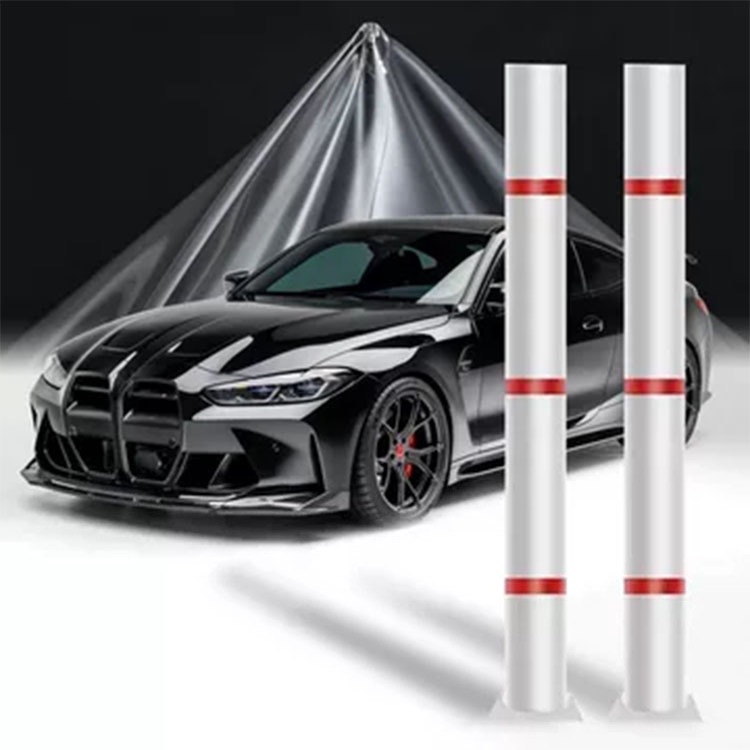
1.52 m × 15 m, 1.52 m × 18 m, or custom specs
Inconsistent length
Short rolls create billing disputes
Batch traceability
Batch number, production date, QC sheet
No batch ID
You cannot isolate defects later
Sample match
Sample-to-bulk retention sample policy
Sample feels better than bulk
Classic bait-and-switch pattern
Packaging
End caps, carton strength, pallet plan
Crushed cartons in photos
Edge damage kills sellable inventory
Export documents
Invoice, packing list, HS suggestion, CO support
“Forwarder will handle”
Customs delays eat margin
OEM/ODM support
Label, carton, spec sheet, warranty language
Only logo sticker service
Private-label buyers need repeatable brand control
For buyers building a private-label line, KeenTop’s OEM/ODM window film and PPF manufacturing support is relevant because it describes private label packaging, sample confirmation, flexible MOQ, product matching, and bulk cooperation. That is the right conversation to have early. Not after production starts.
What Reliable Suppliers Do Before You Ask
Good suppliers pre-empt questions.
A reliable TPU PPF supplier does not wait for you to beg for basic export information. They know a bulk importer needs commercial clarity, technical clarity, and shipment clarity. I trust suppliers more when they slow the buyer down a little and ask better questions.
What market are you selling into? U.S., EU, GCC, Southeast Asia, Australia, Latin America?
What price tier are you targeting? Entry, mid-range, premium, installer-only, dealer-exclusive?
What roll thickness do your installers prefer? 7.5 mil may feel easier for some shops; 8.5 mil and 10 mil may sell better where “thicker means stronger” in consumer marketing, even when installability takes a hit.
What warranty language will your brand use? Three years? Five years? Seven years? Ten years? Warranty claims should match the actual film structure, not the importer’s wishful sales target.
And here is the big one: who owns the specification?
If the supplier owns everything and you know nothing, you are replaceable. If you define the spec, retain samples, record batches, and compare every shipment, you become a real buyer instead of a quote collector.
For buyers that need a narrower product path, the TPU clear paint protection films category gives a cleaner internal route for clear-film procurement. If your catalog also includes tint, privacy, or heat-rejection products, cross-sourcing from a broader film partner may reduce supplier fragmentation; KeenTop’s nano ceramic window films page is relevant for distributors building a wider automotive film portfolio.
The Hard Truth About Factory Claims, Certificates, and “Patents”
I don’t trust certificates by themselves.
ISO logos, patent language, “German technology,” “Japan material,” “USA glue,” “self-healing,” and “10-year warranty” are common in this industry. Some are real. Some are cosmetic. Some are copied from competitors. Some are technically true but commercially meaningless.
Counterfeit and IP risk is not limited to luxury bags. CBP’s FY2024 intellectual property enforcement materials reported more than 32 million counterfeit goods seized with an estimated MSRP above $5.4 billion, and CBP has stated that China and Hong Kong accounted for around 90% of seized quantity in FY2024. See the official material here: CBP FY2024 IPR statistics.
Why should a PPF importer care?
Because “brand-like” packaging, copied warranty cards, fake origin claims, borrowed test reports, and unauthorized use of another company’s trademark can stop goods, trigger marketplace complaints, or poison dealer confidence. If you are importing car paint protection film wholesale, your supplier must prove that your logo, carton, data sheet, and warranty card are clean.
The best TPU PPF supplier will not push you to copy a famous brand’s color code, slogan, warranty card, or box layout. A bad one will say, “No problem, we can make same as 3M/XPEL/Suntek/Llumar style.”
Run.
Private label is not counterfeiting. But lazy private label can slide into legal trouble fast.
Sample Testing: The Importer’s Cheap Insurance Policy
A sample roll is not a gift. It is evidence.
Before a bulk purchase, I would test at least three rolls from different production dates if possible. One fresh roll tells you almost nothing about batch consistency. It only tells you the supplier can prepare a sample.
Here is a practical test routine:
1. Visual and Optical Check
Unroll 2–3 meters under daylight and LED shop lighting. Look for fisheyes, haze, gel dots, coating lines, orange peel, liner marks, and edge waves. Use a black hood or glossy black test panel if possible because defects hide on white paint.
2. Installer Handling Check
Give the film to a professional installer and shut up.
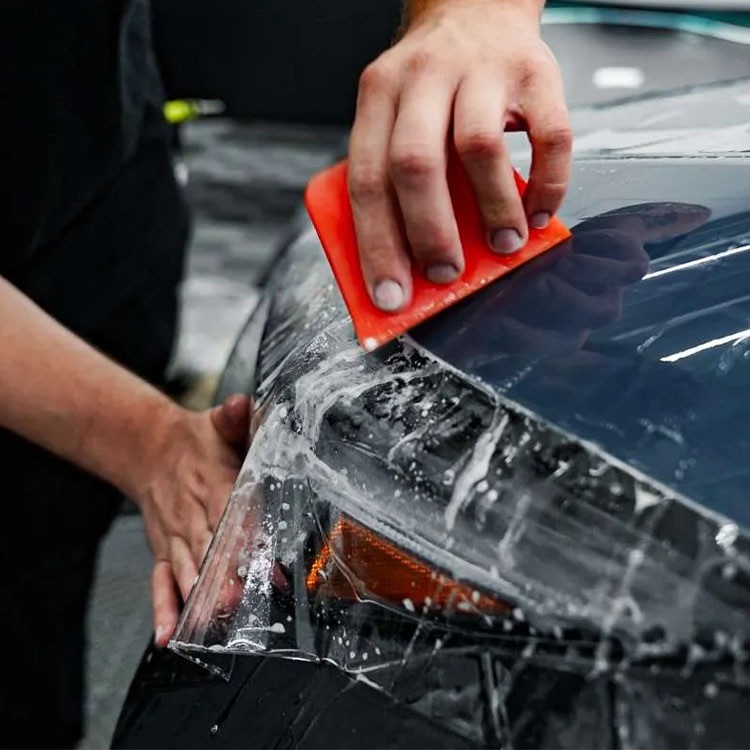
That is the best advice I can give. Installers will tell you more in 20 minutes than a supplier’s PDF will tell you in 20 pages. They will feel stretch, snapback, tack, repositioning, squeegee glide, edge hold, and whether the film fights them on curved panels.
3. Heat and Humidity Check
Put samples under 85°C/85% RH-style conditions if you have lab access, or run a simpler controlled hot-water and humidity screening if you do not. This does not replace lab testing, but it can expose weak adhesive, whitening, edge lifting, and coating instability.
4. Stain and Chemical Check
Test bird-dropping simulants, bug remover, gasoline splash, road tar cleaner, pH 3 acid, pH 10 alkaline cleaner, and IPA wipe behavior. Real car owners do not treat PPF gently.
5. Removal Check
Apply film to a painted test panel, age it, heat it, then remove it. Adhesive residue is a channel killer. Installers remember that pain.
If your supplier resists testing, they are telling you something.
KeenTop’s technical innovation in automotive films section is a relevant internal link for readers who want more R&D-oriented film content, but again, don’t stop at content. Ask for the test sheet behind the content.
Contract Terms That Separate Serious Suppliers From Quote Sellers
The purchase contract should not read like a friendly chat.
For paint protection film bulk import, I would put these items in writing:
Product name and exact structure: TPU base film, adhesive, topcoat, liner
Roll width, roll length, thickness, tolerance, and core size
One more thing: do not let the supplier write a warranty that your business cannot afford. A 10-year warranty looks sexy until a hot-climate market sends you yellowing photos in year three. Match the warranty to the tested film grade, not the competitor’s marketing.
Pricing: What a Low Quote Usually Hides
Low prices have hiding places.
A suspiciously low TPU PPF quote can come from cheaper aromatic TPU, thinner actual film, lower coating weight, unstable adhesive, weak cartons, shorter roll length, poor liner, no batch control, or a supplier trying to fill idle capacity with whatever material is on hand.
Ask for cost logic. You do not need the factory’s full formula, but you should know what drives price:
TPU grade
Film thickness
Topcoat level
Adhesive quality
Liner quality
Roll length
Packaging
MOQ
Color or clear variant
OEM/ODM complexity
Payment terms
Freight method
If two suppliers quote wildly different prices for “8.5 mil hydrophobic self-healing TPU PPF,” one of them is probably not quoting the same product.
A supplier scoring below 75 should not get a major bulk order. A supplier below 60 should not get your brand name on the box.
FAQs
What is a TPU PPF supplier?
A TPU PPF supplier is a manufacturer or export partner that produces or sources thermoplastic polyurethane paint protection film rolls, verifies coating and adhesive performance, supports private-label packaging, and prepares bulk shipments with the documents importers need for customs, resale, installer training, and warranty control.
The best suppliers do more than sell film. They help buyers select the right thickness, surface finish, adhesive behavior, warranty positioning, and packaging model for the target market. For bulk importers, that support can be the difference between repeat orders and slow-moving inventory.
How do I know if a TPU PPF supplier is reliable?
A reliable TPU PPF supplier can prove repeatable quality through sample-to-bulk consistency, batch traceability, test data, installer feedback, export documents, stable packaging, and written claim procedures before the buyer places a large deposit or commits to a private-label rollout.
Do not rely on photos, water-beading videos, or broad claims like “premium TPU.” Ask for real roll samples, batch numbers, coating details, adhesion checks, aging data, carton photos, and a written replacement policy. Good suppliers answer these questions cleanly. Weak suppliers change the subject.
What should I test before importing TPU paint protection film in bulk?
Before importing TPU paint protection film in bulk, test optical clarity, haze, gloss, stretch, adhesive tack, repositioning, edge hold, hydrophobic behavior, stain resistance, yellowing resistance, liner release, roll length, packaging strength, and removal behavior after heat or humidity exposure.
The smartest move is to involve actual installers during testing. Lab data matters, but installer handling exposes real commercial problems: film that creases too easily, adhesive that grabs too fast, edges that lift, or topcoat that scratches during squeegee work.
Is the cheapest PPF wholesale supplier usually a bad choice?
The cheapest PPF wholesale supplier is not always bad, but a quote far below market often signals thinner film, lower-grade TPU, weak adhesive, poor topcoat durability, short roll length, unstable batch control, low-quality cartons, or limited after-sales support.
Cheap film can work in price-sensitive markets if the buyer positions it honestly. The danger comes when a low-grade film is sold as premium, private-labeled with aggressive warranty claims, and pushed into installer networks that expect stable high-end performance.
What documents should a TPU PPF manufacturer provide for import?
A TPU PPF manufacturer should provide a commercial invoice, packing list, product specification sheet, carton list, roll dimensions, batch numbers, production date, suggested HS code, certificate of origin when needed, test reports, private-label artwork confirmation, and warranty terms for bulk import review.
For regulated or tariff-sensitive markets, ask your customs broker to verify classification and duty exposure before shipment. Supplier suggestions are helpful, but the importer is usually responsible for reasonable care, correct declarations, and keeping records that match the goods.
Your Next Steps: Audit the Supplier Before You Audit the Price
If you are choosing a TPU PPF supplier for bulk import, stop asking only, “How much per roll?”
Ask harder questions.
Ask what TPU grade is used. Ask how yellowing is tested. Ask whether the bulk roll will match the sample roll. Ask how claims are handled. Ask how cartons survive ocean freight. Ask whether your private-label packaging is legally clean. Ask whether the supplier can support your next 12 months, not just your first deposit.
For importers, distributors, installers, and private-label buyers ready to compare real film options, start with KeenTop’s TPU paint protection film supplier page or request details on wholesale hydrophobic TPU clear PPF film. Send your target market, roll size, thickness preference, packaging needs, estimated quantity, and warranty goal.