Top Automotive Film Supplier and OEM/ODM Manufacturer – KeenTop
Top Automotive Film Supplier and OEM/ODM Manufacturer – KeenTop Built for B2B: stable supply, flexible customization, and technical support across PPF, automotive window films, architectural films, and industrial valves—helping partners improve delivery efficiency and ROI.
PPF Thickness Guide:The Exact Truth About 6.5–10 mils and When Each is Right
“I’ve killed a $1,400 hood installation because I over-specified thickness. I wanted maximum protection, so I went 10 mil on a deeply sculpted BMW M4 hood — compound curves, aggressive character lines, the whole problem. Edge lift started showing at month four. Film had to come off. And here’s the thing that still bugs this end user: an 8.5 mil would’ve held clean for years on that same panel.“ one customer mentioned due to lack of the PPF thickness guide, he made a wrong decision before.
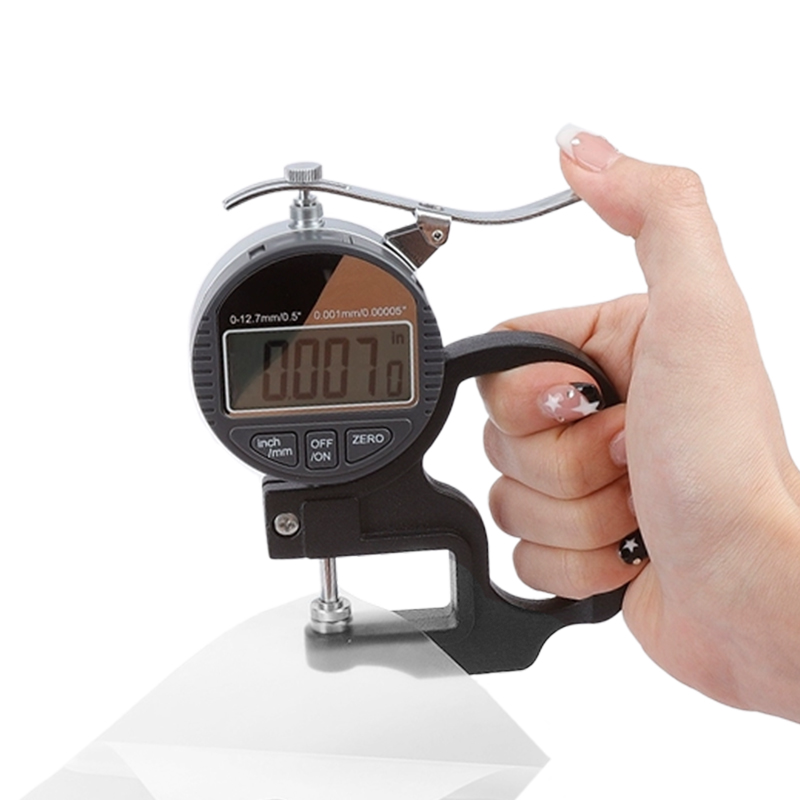
Thickness isn’t just a protection number you chase upward — it’s a conformability variable, a warranty trigger, and an adhesive compatibility constraint that quietly controls whether your installation looks perfect at year three or becomes a warranty dispute at month seven. One mil equals 0.001 inches (roughly 25.4 microns, if you’re working in metric), and it measures the full film stack: TPU base, adhesive, top coat combined. Those layers don’t scale uniformly as you move up the thickness range. That distinction matters more than the spec sheet headline suggests.
That’s the conversation nobody has before the install.
Table of Contents
PPF Thickness Guide: The Exact Truth About 6.5–10 mils and When Each is RightWhat the Mil Rating Is Actually Telling You
Here’s something I frankly believe the industry undersells: two films with identical mil ratings can be completely different products. An 8.5 mil film from one manufacturer might run a 7.2 mil TPU base with a 0.8 mil top coat and 0.5 mil adhesive. A competing 8.5 mil product pads to the same total with a 6.5 mil base and a 1.5 mil top coat. Same number. Completely different performance profile.
Why does the split matter? Impact absorption lives in the TPU base. Surface healing is a function of top coat chemistry and depth. A film built thick on top coat will post gorgeous gloss readings and underwhelming stone chip resistance — and you won’t know that until the first gravel highway stretch. Buyers who skip the layer-specific breakdown are comparing numbers that describe different things.
A 2023 materials science review in MDPI’s Polymers journal found that aliphatic TPU films show measurably different elastic recovery profiles as base layer thickness increases from 150 to 250 microns — that’s the commercial 6.5 mil to 10 mil window. The recovery rate difference under standardized impact testing exceeded 22% between the thinnest and thickest samples. Twenty-two percent. That’s not rounding error. That’s the gap between absorbing a gravel hit and transferring it straight to the clear coat.
PPF Thickness Guide: 6.5 Mil: Stop Underselling It and Stop Misusing It
People treat 6.5 mil like the “cheap option.” It isn’t. It’s the right option for a specific — and genuinely wide — application profile, and dismissing it as entry-level is how you end up over-spending on installs that don’t need the extra thickness.
Urban daily driver? 6.5 mil. Low-exposure supplementary panels — door cups, mirror backs, door edges? 6.5 mil. Cost-sensitive full-body installation where the client understands the stone chip trade-off? Still 6.5 mil, and here’s why it actually wins on those complex sculpted panels: reduced thickness means less material memory fighting the installer on tight radii. Conformability on difficult geometry is genuinely superior at 6.5 mil. Installation failure rates drop. Edge lift is less common. That’s a real performance advantage — not a consolation prize.
But. If your client commutes highway miles through construction zones or stone chip corridors? Don’t. A 2024 independent testing summary covered by Consumer Reports found thin-gauge PPF under 7 mil showed a 31% higher stone chip penetration rate versus mid-gauge films under standardized gravel impact conditions at 60 mph equivalent velocity. Thirty-one percent higher penetration. On the panel that takes the most abuse on a highway-driven car.
So the spec decision isn’t “is 6.5 mil good enough?” It’s “does this specific application actually expose the primary protection surfaces to highway-speed debris?” Answer that honestly and the thickness decision makes itself.
PPF Thickness Guide:8–8.5 Mil: Why the Market Converged Here (And Why That’s Correct)
This is the range I default to. Not because it’s the safe middle — because the conformability-to-protection ratio genuinely peaks here for the overwhelming majority of production vehicle applications. Most tier-1 manufacturers center their flagship products in the 8–8.5 mil range. The brands that supply OEM wrap programs. Not because they can’t engineer thicker. Because their installation data tells them this is where failures minimize.
What changes between 6.5 and 8 mil isn’t just the raw thickness number — it’s the adhesive formulation too, or it should be. Premium 8 mil products typically run higher initial tack adhesive to compensate for the increased film weight during installation. A thicker film with under-specified adhesive performs worse on vertical surfaces than a properly matched thinner film. Always — always — ask for the adhesive specification alongside the total mil rating. If the rep can’t give you that number, that tells you something.
Price differential between 6.5 and 8.5 mil full-front installations runs roughly $150–$400 depending on market and brand. Warranty differential is often more interesting: several major manufacturers tier their coverage to thickness, 7-year warranties at 8 mil versus 5-year at 6.5 mil on the same product family. That’s the manufacturer’s own actuarial math telling you where their confidence sits.
10 Mil: I Love It for the Right Application and Hate What People Do With It
Track cars. Off-road builds. Flat leading edges on highway-heavy commercial fleets. Front bumpers on vehicles that genuinely see sustained high-speed stone chip exposure across flat geometry. That’s the application fit for 10 mil. It’s real, it’s validated, and the protection performance at this thickness over an 8.5 mil is measurable — not marketing language.
The ugly truth is that 10 mil gets over-specified constantly, and the client pays for it twice. Once at purchase, once when the edge lifts.
Material memory at 10 mil is high enough that forcing conformance on compound curves — a deep-sculpted hood, a bumper with aggressive geometry, anything with a tight radius character line — introduces residual stress into the installation. That stress doesn’t show up immediately. It expresses itself as edge lift, micro-bubbles, or tension lines appearing at 12–18 months, right when the client starts recommending (or not recommending) the installer to their network. This isn’t an installer skill problem. I want to be clear about that. It’s physics. The film is fighting the geometry and eventually wins.
.If you want that deep, glass-like finish, especially on high-gloss surfaces, using specific piano black paint protection films within the 8-mil range ensures the finish remains swirl-free without the bulk of thicker alternatives.”https://keentopindustrial.com/tpu-ppf/
The practical rule I use: 10 mil belongs on flat-to-moderately-curved surfaces with documented high-impact exposure. If the client wants maximum protection on complex geometry, 8.5 mil correctly installed beats 10 mil forced into place. Every time.
Track vehicles, off-road builds, flat leading-edge surfaces, fleet front ends
Outstanding
Fair (flat panels only)
5–7 years (geometry-dependent)
+35–50%
Look at the warranty column on 10 mil. Several manufacturers actually shorten their coverage duration on 10 mil installations on complex geometry — because their own claims data shows elevated failure rates at that thickness on non-flat surfaces. That’s the manufacturer’s internal numbers saying something about application fit. Pay attention to it.
The Installation Cost Math Nobody Does Upfront
Here’s what gets missed in almost every client conversation: thicker film increases installation labor cost and installation failure risk at the same time. Those two things compound.
A professional installer on a 10 mil complex panel needs significantly more time than the same panel in 8 mil. If an edge lifts, if a tension bubble appears — that rework cost lands somewhere. Usually on the installer through warranty claims, and eventually on the client through higher pricing on future work. A 2023 Bloomberg Intelligence report on the automotive aftermarket coatings sector found PPF installation labor costs increased 18–24% since 2021, with complexity surcharges on thick-film applications becoming standard practice at premium shops across North American and European markets.
That means the thickness choice is a total installed cost decision, not a material cost decision. A 10 mil specification on a heavily sculpted hood can add $200–$350 in labor versus 8.5 mil on the same panel. Across a full vehicle — that differential compounds fast.
What the Warranty Actually Says (Read It, Seriously)
The thickness-to-warranty mapping in most manufacturer documentation is more nuanced than any sales conversation reflects. Most major manufacturers structure coverage around installation geometry categories as well as film thickness. A flat-panel 10 mil installation might carry a 7-year warranty. That same film on a complex front bumper? Three years, or “installer-discretion” language that’s functionally unenforceable.
Vehicle type, primary use case, which panels you’re prioritizing — drop it in the comments. I’ll give you a specific thickness recommendation with the reasoning behind it, not a “it depends” non-answer that helps nobody.