Proveedor líder de láminas para automoción y fabricante OEM/ODM - KeenTop
Proveedor líder de láminas para automoción y fabricante OEM/ODM - KeenTop Diseñado para B2B: suministro estable, personalización flexible y asistencia técnica en PPF, películas para ventanas de automóviles, películas arquitectónicas y válvulas industriales, para ayudar a los socios a mejorar la eficiencia de las entregas y el retorno de la inversión.
Explosive Color PPF Growth: Balancing SKU Expansion with High-End QC for Massive Margins in 2026
Three years ago, a distributor I know — decent-sized operation, mid-Atlantic region, been in the film game since clear bra was still being cut with X-Acto knives — told me he was “cautiously optimistic” about color PPF. Last time I talked to him, he had 94 active SKUs, two rolls of matte olive that hadn’t moved in eight months, and a QC dispute with his primary supplier that had been open for eleven weeks. Cautiously optimistic. Sure.
Here’s the ugly truth nobody in this supply chain wants to say out loud: the color PPF explosion is generating real revenue y real operational damage simultaneously, and the distributors who don’t see both sides of that equation are going to get hurt. Badly.
The topline numbers are genuinely seductive — I get it. The global paint protection film market sat at roughly USD 447 million in 2023 and is tracking toward USD 890 million by 2030, according to market data from Grand View Research. Color variants are punching above their weight in that growth curve. Consumers in 2024 aren’t buying PPF just to protect their clear coat anymore — they’re buying it to change the look of the car, which turns a protective product into a styling product and opens up an entirely different demand psychology. That’s a genuine market shift. It’s real. But it doesn’t automatically translate into distributor profitability, and I think a lot of people are conflating “the category is growing” with “my margins are safe,” which — no. Those are two completely different things.
Color PPF: The SKU problem. Let me be direct.
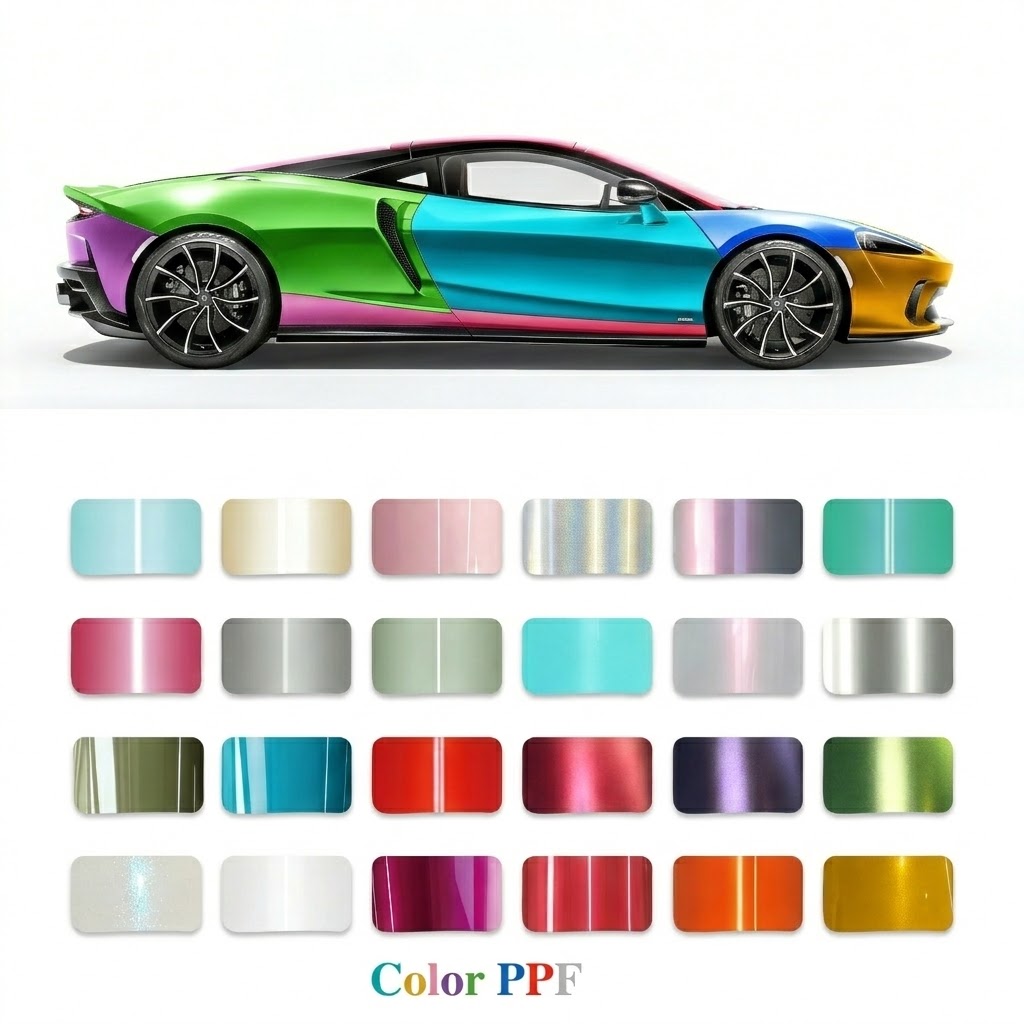
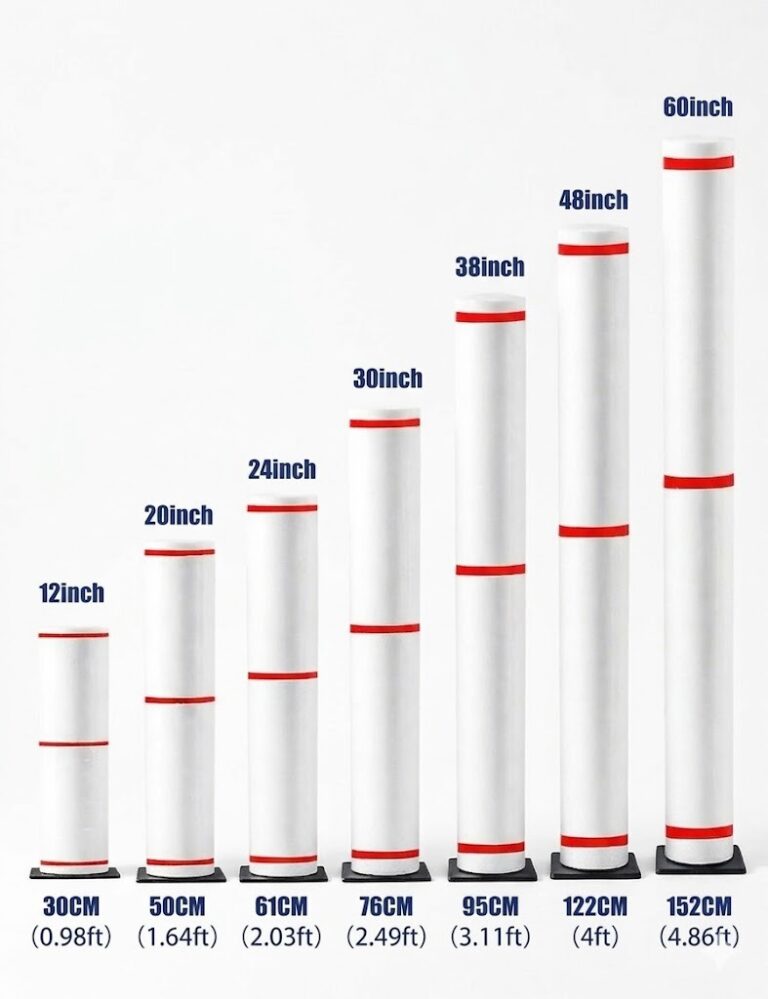
A distributor who ran 3-4 clear TPU SKUs four years ago is now being asked — by installers, by end consumers, by enthusiastic supplier reps — to stock somewhere between 12 and 18 color options, each fragmented across roll widths (1.22m, 1.52m, 1.83m being the standard cuts), finish types (gloss, satin, matte, and now increasingly the “color shift” category which is its own whole conversation), and MOQ thresholds that vary wildly by supplier. The complexity doesn’t scale linearly with SKU count. It compounds. And what I find when I look at most distributor assortments — even reasonably sophisticated ones — is a Pareto distribution that people know is there but refuse to act on: roughly 20% of color SKUs driving 80% of color revenue, with the rest of the catalog just… sitting there, aging under fluorescent warehouse lighting, accruing UV degradation risk, tying up working capital.
If you’re building out your color PPF product assortment without running hard velocity analysis on every SKU at 90-day intervals, you’re not managing inventory. You’re just storing it.
And storage has costs that aren’t always visible on the P&L until they suddenly are.
Now. Quality control. This is where I frankly get a little heated, because the QC conversation in color PPF is one that the industry has been having quietly — in side conversations at trade shows, in installer Facebook groups, in supplier complaint queues — without anybody writing it down clearly. So let me write it down.
Clear TPU film has known, testable benchmarks. Optical haze below 1%, elongation at break in the 500–600% range, adhesive peel strength somewhere in the 15–25 N/25mm window — these are numbers that a competent lab can validate batch-by-batch with a reasonable degree of consistency. Color PPF breaks that consistency model almost completely, because the moment you introduce pigment chemistry into a TPU matrix — titanium dioxide (TiO₂) for whites and light colors, carbon black for dark shades, organic dye complexes for metallics and those trendy chrome-delete finishes — you’ve introduced variables that are genuinely hard to control at scale. Pigment dispersion uniformity across the substrate. UV-driven color shift over time (measured as Delta-E, or ΔE — a ΔE of 2.0 is where color variance becomes visible to the naked human eye). Interlayer adhesion between the pigmented base and the topcoat protective layer.
Budget-tier suppliers — and there are a lot of them in this space right now, mostly pushing product through gray-channel distributors at aggressive price points — are routinely shipping color PPF with inter-batch ΔE variance of 4.0 to 6.0. On a single-panel application, maybe you don’t notice. On a full hood wrap? Or a complete vehicle? You notice. The installer notices. The customer notices. And then the dispute comes back through the chain and lands — not at the manufacturer’s door, because the manufacturer is overseas and the claim window is narrow — but at the distributor’s desk.
That’s the QC burden transfer that isn’t getting priced into margins anywhere near adequately.
TPU PPF manufacturers operating with ISO 9001-certified lines and spectrophotometric batch testing can hold color consistency to ΔE below 1.5. That’s the benchmark I’d use as a minimum qualifier when evaluating color suppliers. But that level of quality infrastructure costs money to run, and it shows up in the price point — which then creates its own tension for distributors trying to compete against cheaper product in price-sensitive markets. You can source the budget roll. It’ll look fine in the box. It’ll look fine on the car. For maybe eight months. Then you’ll find out what ΔE 5.0 looks like under direct sunlight on a dark-colored vehicle, and the conversation with your installer customer will not be a good one.
I’ve seen this play out enough times that I don’t have much patience left for the “but the price was good” argument.
Let’s run the margin math. Briefly but honestly.
Standard clear PPF at distributor tier — and these numbers vary obviously by volume, brand, and relationship — has historically sat in the 25–40% gross margin range. Color PPF carries manufacturer-level price premiums of 30–60% over equivalent clear product. Sounds like a margin opportunity, right? Except that premium doesn’t flow proportionally downstream. From what I’ve seen in 2024, most distributors are capturing somewhere between 3 and 8 additional gross margin percentage points on color versus clear — while simultaneously absorbing higher inventory carrying risk, higher defect/return rates, and a per-SKU cost structure that’s significantly more complex than clear.
The math works if velocity is high and your defect rate is near zero. Both conditions are hard to achieve at the same time, especially in a category that’s still maturing and where consumer demand patterns are genuinely unpredictable.
A 2024 Reuters analysis of specialty film and coating supply chains identified a pattern that maps almost perfectly onto color PPF right now: rapid SKU proliferation driven by consumer preference fragmentation consistently compresses mid-tier distributor margins when those distributors lack either the scale to negotiate favorable MOQs or the data systems to manage high-SKU portfolios intelligently. That’s not a PPF-specific problem. It’s a category management problem. It’s just that color PPF is hitting it harder and faster than most categories because the demand acceleration has been so sharp.
So what do you actually do? A few things I’d argue pretty strongly for.
Anchor your initial color assortment around proven velocity finishes — matte black, satin white, and película protectora de pintura negro piano for trim and pillar applications. These move. Consistently. Across markets and installer demographics. Start there, get 6 months of your own sell-through data, then expand deliberately from a position of actual evidence rather than supplier enthusiasm or installer requests that may not represent broader market demand.
Demand batch-level spectrophotometric QC documentation before you accept any color PPF shipment. Not a general spec sheet — a batch-specific report tied to the lot number on the rolls you’re actually receiving. If the supplier can’t produce that, or responds with confusion about why you’re asking — that response is itself useful information about their production standards.
Negotiate extended payment terms or consignment arrangements for experimental color SKUs until you have real velocity data. Don’t let a supplier’s aggressive new-SKU push become your cash flow exposure.
And honestly? If you’re still making assortment decisions based on catalog browsing and rep relationships rather than SKU-level velocity data tracked at 30/60/90-day intervals — the color PPF explosion isn’t your real problem. Your inventory management process is. Fix that first, then expand the color range.
Métrica
Clear TPU PPF
Color PPF (Premium Tier)
Color PPF (Budget Tier)
Avg. Distributor Gross Margin
28–38%
31–44%
22–30%
QC Defect Rate (Batch Variance)
Low (ΔE <1.0)
Moderate (ΔE <1.5)
High (ΔE 3.0–6.0+)
SKU Velocity (Avg. Roll Turns/Year)
High (8–14x)
Medium (4–8x)
Low–Medium (2–5x)
Inventory Write-off Risk
Bajo
Medio
Alta
Installer Training Requirement
Bajo
Medium–High
Alta
Typical MOQ (Rolls per SKU)
5–10
10–25
15–30
UV Color Stability (Years)
N/A
5–7 years (certified)
2–4 years (estimated)
The premium tier in that table — products from manufacturers like Keentop, whose TPU clear and color film line operates with documented batch QC — costs more per roll. It also generates fewer warranty headaches, fewer installer relationship repairs, and fewer write-off conversations at year-end. Budget tier looks better on the initial invoice. Usually. Until it doesn’t.
Preguntas frecuentes
What is color PPF film and how does it differ from standard clear PPF?
Colored PPF film is a thermoplastic polyurethane (TPU) paint protection film infused with pigment compounds — including titanium dioxide (TiO₂) for whites or carbon black for dark shades — that simultaneously protects the vehicle surface and delivers a color or finish transformation, unlike optically transparent clear PPF which serves a protective function only. Color PPF typically carries a 30–60% manufacturer-level price premium over clear equivalents, with substantially higher QC complexity due to pigment dispersion variance, UV color-shift risk (measured as ΔE), and interlayer adhesion variability across production batches.
How should distributors manage color paint protection film SKU expansion without destroying margins?
Colored PPF distributor margin management requires anchoring initial assortments to 4–6 high-velocity finishes — matte black, satin white, and piano black being the most consistent performers across markets — while demanding spectrophotometric batch QC documentation from suppliers before accepting shipments, and using 6–12 months of proprietary sell-through velocity data to drive all subsequent SKU additions rather than responding reactively to installer requests or supplier catalog pressure.
What role does PPF product assortment strategy play in distributor profitability?
PPF product assortment strategy directly controls distributor profitability in the color segment because high SKU counts, variable sell-through velocity, and elevated defect exposure mean that undisciplined assortment expansion translates almost mechanically into capital tied up in slow-moving or defective inventory — inventory that cannot be liquidated without significant margin erosion that compounds across reporting periods.
Is the color PPF market growth sustainable for mid-size distributors?
Color PPF market growth is sustainable specifically for distributors who implement SKU rationalization based on velocity data, supplier QC validation with spectrophotometric documentation, and velocity-driven replenishment systems — but represents a measurable financial and operational risk for distributors expanding color assortments reactively, particularly those managing 60–120+ SKU portfolios without the data infrastructure to identify and cull underperforming lines before carrying costs become material.
If you’re building a color PPF program and you want a supplier baseline that won’t create avoidable QC fires — take a look at the full color PPF product range at Keentop Industrial. Ask for batch QC documentation. See what they come back with. That response — or the absence of one — will tell you most of what you need to know about whether the partnership makes sense. The hard work of building a profitable color assortment is still yours to do. But starting from a foundation of verifiable QC rather than supplier promises is, from my experience, the only version of this story that ends well.